The Ultimate Guide to Tanzania’s National Parks and Reserves
Tanzania is widely recognized as one of Africa’s greatest safari destinations, offering some of the most spectacular wildlife experiences anywhere in the world. From the endless plains of Serengeti National Park to the dramatic landscapes of Ngorongoro Crater, the country is home to extraordinary ecosystems that support incredible biodiversity and unforgettable safari adventures. Travelers from around the world visit Tanzania to experience its rich wildlife, breathtaking scenery, and authentic African safari atmosphere.
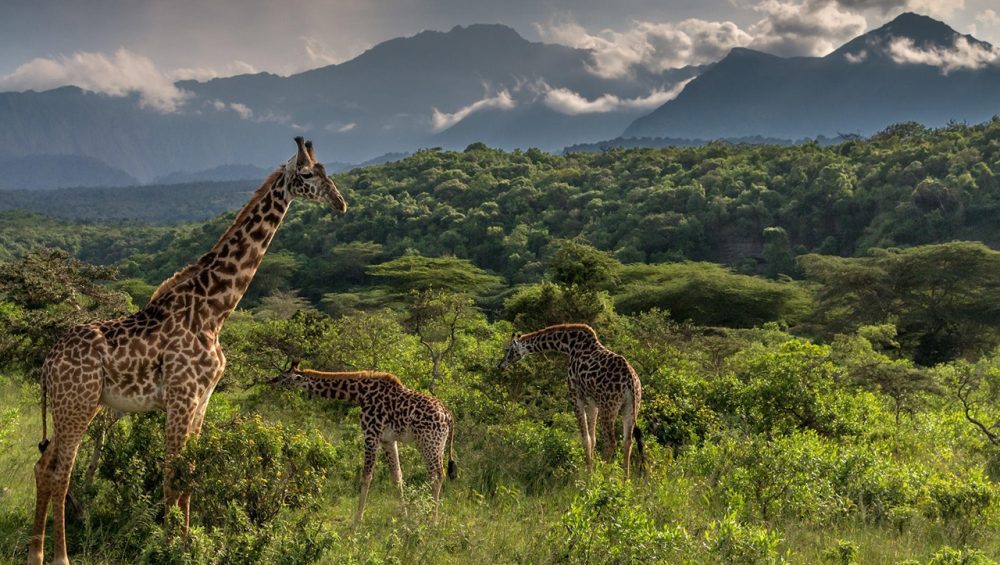
What makes Tanzania truly unique is the diversity of its protected landscapes. The country contains vast savannahs, volcanic craters, wetlands, forests, lakes, mountains, and remote wilderness areas that provide habitats for thousands of animal species. Tanzania’s national parks and reserves protect some of the largest wildlife populations remaining on Earth, including elephants, lions, leopards, cheetahs, giraffes, wildebeest, zebras, hippos, crocodiles, and hundreds of bird species.
Tanzania is also home to the world-famous Great Wildebeest Migration, where millions of wildebeest and zebras move across the Serengeti ecosystem in search of fresh grazing. This natural phenomenon is considered one of the greatest wildlife spectacles on the planet and attracts photographers, conservationists, and safari travelers throughout the year.
Beyond the Serengeti, Tanzania offers a remarkable range of safari destinations, each with its own unique atmosphere and wildlife experiences. Tarangire National Park is known for its massive elephant herds and iconic baobab trees, while Ruaha National Park provides remote wilderness experiences with exceptional predator sightings and fewer tourists. Nyerere National Park, formerly part of the Selous Game Reserve, offers boat safaris, walking safaris, and untouched landscapes, making it ideal for travelers seeking more exclusive adventures.
The country’s commitment to conservation has played a major role in preserving these ecosystems and wildlife populations. Tanzania has established extensive protected areas, including national parks, game reserves, conservation areas, and marine parks that safeguard habitats and migration routes essential for wildlife survival. Conservation efforts supported by tourism help protect endangered species, maintain biodiversity, and create economic opportunities for local communities living near protected areas.
Travelers visit Tanzania for many reasons beyond wildlife alone. Some come for luxury safari experiences in world-class lodges and tented camps, while others seek authentic cultural interactions with local communities such as the Maasai people. Adventure travelers explore remote wilderness regions through walking safaris, fly-in safaris, and chimpanzee trekking experiences in western Tanzania. Families, honeymoon couples, photographers, and first-time safari travelers all find unique experiences tailored to their interests and travel styles.
Safari experiences in Tanzania are incredibly diverse. Visitors can enjoy classic game drives across open plains, sunrise hot air balloon safaris above Serengeti, guided walking safaris through untouched wilderness, birdwatching near lakes and wetlands, or boat safaris along wildlife-rich rivers. Many travelers also combine safari adventures with beach holidays in Zanzibar to create the perfect balance between adventure and relaxation.
Understanding Tanzania’s national parks and reserves can sometimes feel overwhelming because of the country’s size and the variety of safari options available. Each destination offers different wildlife experiences, landscapes, climates, and seasonal highlights. Choosing the right parks, travel season, accommodations, and safari style requires careful planning to create the best possible safari experience.
This guide explores Tanzania’s most important national parks and reserves, the best times to visit, wildlife encounters travelers can expect, safari activities available across different ecosystems, and practical tips for planning an unforgettable safari adventure. Whether you are planning your first African safari or returning to explore more of Tanzania’s wilderness, this guide will help you better understand the incredible diversity and beauty that make Tanzania one of the world’s ultimate safari destinations.
At Nihapa Tours, safari experiences are carefully designed to help travelers explore Tanzania’s most extraordinary national parks while enjoying authentic wildlife encounters, comfortable accommodations, expert local guides, and personalized safari adventures tailored to different travel styles and interests.
Overview of Major National Parks in Tanzania
Tanzania is home to some of Africa’s most iconic national parks and wildlife reserves, each offering unique landscapes, ecosystems, and safari experiences. From the endless savannahs of Serengeti National Park to the breathtaking volcanic scenery of Ngorongoro Crater, the country’s protected areas showcase extraordinary biodiversity and world-class wildlife viewing opportunities. These parks are not only important tourism destinations but also vital conservation areas that protect endangered species, migration routes, and natural habitats across Tanzania.
Northern Tanzania is especially famous for its classic safari circuit, which includes Serengeti, Tarangire National Park, and Lake Manyara National Park. Meanwhile, southern parks such as Ruaha National Park and Nyerere National Park provide more remote wilderness experiences with fewer crowds and untouched landscapes.
Each national park in Tanzania offers something different, whether it is witnessing the Great Wildebeest Migration, spotting large herds of elephants, enjoying walking safaris, exploring river ecosystems, or experiencing authentic cultural encounters near protected areas. Understanding the unique characteristics of each destination helps travelers choose the right safari itinerary based on wildlife interests, travel style, and the type of adventure they want to experience in Tanzania.
Serengeti National Park
Serengeti National Park is Tanzania’s most famous national park and one of the world’s greatest wildlife destinations. Known for its endless golden plains, extraordinary predator populations, and the spectacular Great Wildebeest Migration, Serengeti represents the classic African safari experience that many travelers dream about. The park attracts wildlife enthusiasts, photographers, conservationists, honeymoon travelers, and adventure seekers from around the world who come to witness its breathtaking landscapes and incredible biodiversity.
Located in northern Tanzania near the border with Kenya, Serengeti National Park covers approximately 14,750 square kilometers, making it one of Africa’s largest protected ecosystems. The park forms part of the greater Serengeti ecosystem, which includes conservation areas and migration corridors stretching into Kenya’s Maasai Mara. Its name comes from the Maasai word “Siringet,” meaning “endless plains,” perfectly describing the vast open grasslands that dominate much of the park.
Serengeti National Park was officially established in 1951, making it Tanzania’s oldest national park and one of Africa’s earliest protected wildlife areas. The park was created primarily to protect the region’s incredible wildlife populations and migration systems from hunting and habitat destruction. Over the decades, Serengeti has become one of the most important conservation areas in the world and is now recognized as a UNESCO World Heritage Site because of its ecological importance and exceptional biodiversity.
One of the main reasons Serengeti is globally famous is the Great Wildebeest Migration, often described as the greatest wildlife spectacle on Earth. Every year, more than two million wildebeest, zebras, and gazelles move across the Serengeti ecosystem searching for fresh grazing and water. This continuous migration cycle creates dramatic wildlife encounters, especially during river crossings where crocodiles wait along the banks while predators such as lions and hyenas follow the herds closely.
The migration moves through different parts of the Serengeti throughout the year. Between January and March, the southern Serengeti becomes the center of activity during the calving season, when thousands of wildebeest calves are born daily. From June to July, herds move toward the Western Corridor and Grumeti River crossings. Between July and September, the Northern Serengeti becomes one of the best places to witness dramatic Mara River crossings as herds move between Tanzania and Kenya.
Serengeti is also famous for its extraordinary wildlife diversity beyond the migration itself. The park supports one of the highest concentrations of predators in Africa, including lions, leopards, cheetahs, hyenas, and wild dogs. Large elephant herds, buffalo, giraffes, hippos, crocodiles, zebras, antelopes, and countless bird species are commonly seen throughout the park.
Predator sightings are one of the biggest highlights of safaris in the Serengeti. The park is particularly well known for lion populations, with prides frequently seen resting on kopjes, hunting on open plains, or interacting near migration herds. Leopards are often spotted in riverine forests and acacia woodlands, while cheetahs thrive in the open grasslands where they hunt gazelles at incredible speeds.
Different regions of the Serengeti offer unique safari experiences depending on the season and wildlife movement.
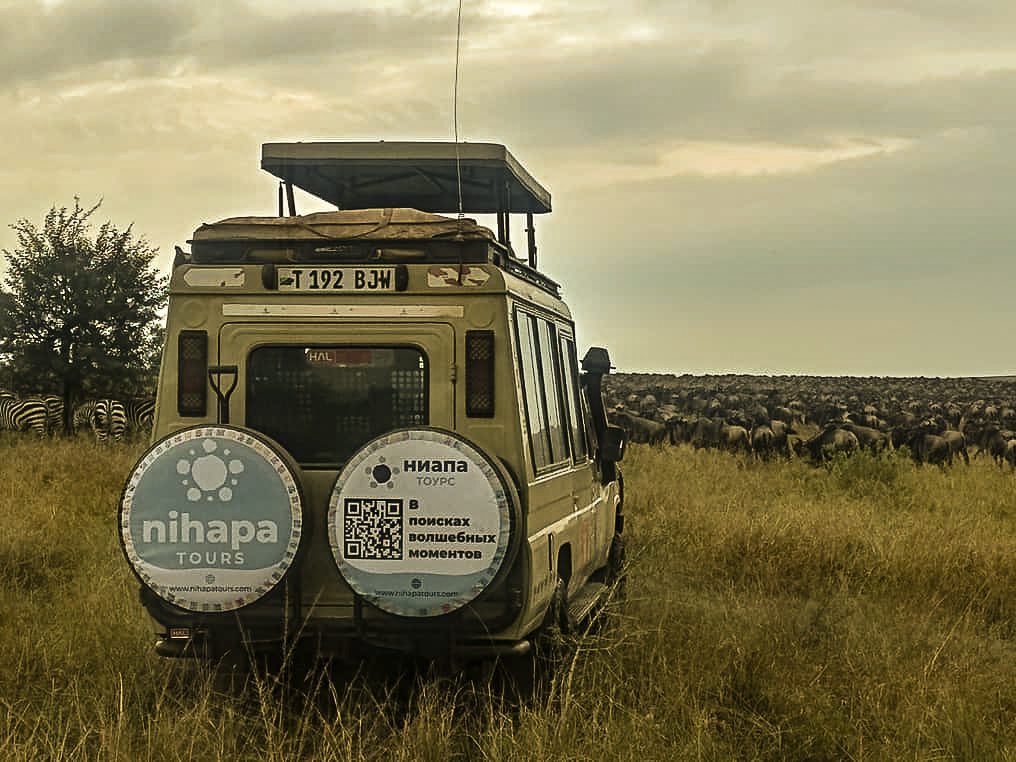
Central Serengeti
Central Serengeti, also known as Seronera, is considered the heart of the park and one of the best year-round safari areas in Tanzania. The region contains permanent water sources that attract wildlife throughout the year, making it excellent for predator sightings even outside migration season. Visitors frequently encounter lions, leopards, elephants, hyenas, and large herbivore populations in this area.
Northern Serengeti
Northern Serengeti becomes especially popular between July and October when the migration reaches the Mara River crossings. This region offers dramatic wildlife encounters as thousands of wildebeest attempt to cross crocodile-filled rivers while predators wait nearby. Northern Serengeti also provides quieter safari experiences compared to the more crowded central areas.
Western Corridor
The Western Corridor is famous for the Grumeti River and migration crossings that occur during May and June. The region contains riverine forests, open plains, and diverse wildlife habitats that support crocodiles, hippos, elephants, and large predator populations.
Accommodation options in Serengeti range from luxury lodges and boutique tented camps to mid-range camps and mobile migration camps that follow wildlife movement seasonally. Luxury properties provide exceptional comfort, fine dining, private decks, and exclusive safari experiences, while tented camps offer more immersive wilderness atmospheres close to nature.
Serengeti also offers a wide range of safari activities beyond traditional game drives. Hot air balloon safaris are among the most iconic experiences, allowing travelers to float above the plains at sunrise while observing wildlife from the air. Walking safaris, photography safaris, cultural visits, and birdwatching experiences are also available in certain areas.
The best time to visit Serengeti depends largely on the type of safari experience travelers want. The dry season from June to October generally provides excellent wildlife viewing because animals gather near water sources and vegetation becomes thinner. Migration river crossings are most common between July and September in the northern Serengeti. However, the green season from November to May offers lush landscapes, fewer crowds, beautiful scenery, and excellent opportunities to witness calving season in the southern Serengeti.
Beyond tourism, the Serengeti plays an essential role in global conservation efforts. The park protects one of the last remaining large-scale terrestrial migration systems on Earth and provides critical habitats for endangered species and complex ecosystems. Conservation initiatives supported by tourism help fund anti-poaching programs, wildlife research, habitat protection, and community development projects throughout the region.
Today, Serengeti National Park remains one of the most important safari destinations in the world, offering extraordinary wildlife encounters, breathtaking landscapes, and authentic African wilderness experiences that continue to inspire travelers from every corner of the globe.
Ngorongoro Crater
Ngorongoro Crater is one of Africa’s most extraordinary natural wonders and among the most iconic safari destinations in Tanzania. Famous for its breathtaking scenery, dense wildlife populations, and unique volcanic landscape, the crater offers one of the most rewarding safari experiences anywhere in the world. Often referred to as the “Eighth Wonder of the World,” Ngorongoro combines spectacular wildlife viewing with dramatic landscapes and rich cultural heritage within a single protected ecosystem.
The Ngorongoro Crater was formed millions of years ago when a massive volcano erupted and collapsed inward, creating the world’s largest intact volcanic caldera. The crater measures approximately 260 square kilometers and features steep walls rising over 600 meters above the crater floor. This natural enclosure created a unique ecosystem where wildlife thrives year-round due to permanent water sources, fertile grasslands, forests, swamps, and soda lakes found within the crater.
Because of its outstanding ecological importance and cultural significance, the Ngorongoro Conservation Area was designated a UNESCO World Heritage Site in 1979. The area is internationally recognized for protecting both wildlife and the traditional lifestyles of indigenous communities, particularly the Maasai people, who continue to live and graze livestock within the conservation area.
One of the biggest attractions of Ngorongoro Crater is its exceptional wildlife density. The crater floor supports an estimated 25,000 large animals, making it one of the best places in Africa for concentrated wildlife viewing. Travelers visiting the crater can often spot lions, elephants, buffalo, zebras, wildebeest, hippos, hyenas, jackals, gazelles, and flamingos during a single game drive.
Ngorongoro is especially famous for its endangered black rhino population. The crater remains one of the few places in Tanzania where travelers have a realistic chance of spotting black rhinos in their natural habitat. Strict conservation efforts and anti-poaching measures have helped protect these rare animals within the crater ecosystem.
The coexistence between wildlife and the Maasai people is another unique aspect of the Ngorongoro Conservation Area. Unlike national parks, where human settlement is restricted, the conservation area allows Maasai communities to continue their traditional pastoral lifestyle while living alongside wildlife. Visitors often see Maasai herders with cattle near the crater highlands, creating cultural landscapes that reflect centuries of coexistence between people and nature.
The crater floor ecosystem is incredibly diverse despite its relatively compact size. Open grasslands support grazing animals such as wildebeest and zebras, while the Lerai Forest provides shelter for elephants, monkeys, and leopards. Swamps and freshwater springs attract hippos and water birds, while Lake Magadi draws flamingos and other aquatic species to its alkaline waters.
Safari experiences inside Ngorongoro Crater are truly unique because wildlife viewing is concentrated within a smaller area compared to larger parks such as Serengeti. Travelers descend from the crater rim early in the morning and spend the day exploring different habitats while searching for wildlife. The dramatic scenery of the crater walls surrounding the landscape creates an unforgettable safari atmosphere unlike anywhere else in Africa.
Scenic viewpoints around the crater rim provide breathtaking panoramic views of the entire caldera. Early morning mist rising from the crater floor, combined with golden sunlight, creates spectacular photographic opportunities. Many travelers consider the first view of Ngorongoro Crater from the rim to be one of the most memorable moments of their safari in Tanzania.
Accommodation around the crater rim ranges from luxury safari lodges and boutique camps to mid-range tented camps and safari lodges located in nearby Karatu. Many crater rim lodges offer stunning views overlooking the caldera, allowing guests to enjoy sunrise and sunset scenery directly from their rooms or viewing decks. Luxury lodges combine exceptional comfort with easy access to early morning crater descents, while camps near Karatu often provide quieter surroundings and cultural experiences within local farming communities.
Ngorongoro Crater remains one of Tanzania’s most important conservation areas and safari destinations because of its incredible wildlife diversity, geological significance, and cultural heritage. Its combination of spectacular scenery, concentrated wildlife viewing, and unique Maasai coexistence creates an unforgettable safari experience that continues to attract travelers from around the world.
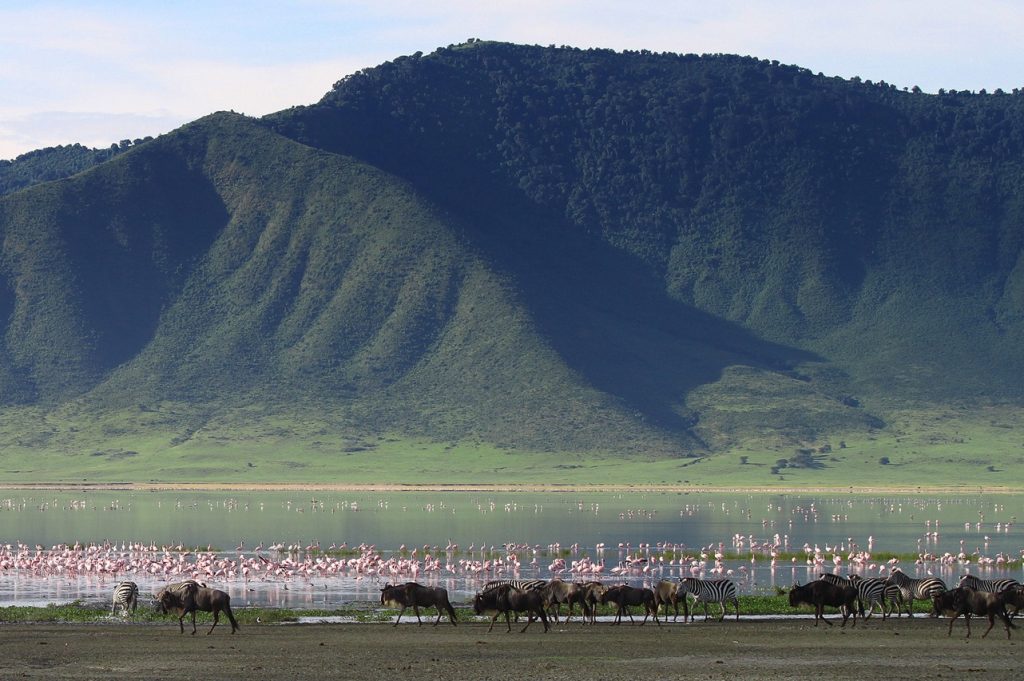
Tarangire National Park
Tarangire National Park is one of Tanzania’s most underrated safari destinations, known for its massive elephant herds, ancient baobab trees, and peaceful wilderness atmosphere. Located in northern Tanzania, the park forms part of the country’s famous northern safari circuit alongside Serengeti, Ngorongoro Crater, and Lake Manyara. Although often overshadowed by Serengeti, Tarangire offers exceptional wildlife viewing experiences with fewer crowds, making it ideal for travelers seeking a quieter and more authentic safari experience.
Covering approximately 2,850 square kilometers, Tarangire National Park is characterized by rolling savannahs, seasonal swamps, acacia woodlands, rocky ridges, and the life-giving Tarangire River that flows through the park. The river is the park’s most important water source and plays a critical role in supporting wildlife during the dry season when many surrounding areas become extremely dry.
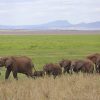
Tarangire is especially famous for its large elephant population. During peak dry season months, the park hosts some of the largest concentrations of elephants in East Africa, with herds sometimes numbering hundreds of individuals. Watching elephants move gracefully between baobab trees or gather near the riverbanks is one of the most unforgettable safari experiences in Tanzania. The park’s elephants are known for their relaxed behavior, allowing visitors to enjoy close yet respectful wildlife encounters.
Another defining feature of Tarangire is its iconic baobab trees, some of which are believed to be hundreds of years old. These massive trees dominate the landscape and create dramatic scenery throughout the park. Their enormous trunks store water during dry periods, helping them survive in harsh environmental conditions. Baobabs are often photographed during sunrise and sunset, adding to Tarangire’s unique visual beauty.
The Tarangire River is the heart of the park’s ecosystem. During the dry season from June to October, wildlife from surrounding regions migrates toward the river in search of water. This seasonal concentration creates outstanding game viewing opportunities as elephants, zebras, wildebeest, buffalo, giraffes, antelopes, and predators gather near the remaining water sources.
The dry season is generally considered the best time to visit Tarangire National Park because wildlife viewing becomes particularly spectacular. Large animal concentrations can often rival those seen in the Serengeti, especially for elephants and herbivores. Predators such as lions, leopards, hyenas, and cheetahs also become easier to spot as prey animals gather near the river.
Tarangire is also one of Tanzania’s finest birdwatching destinations. The park is home to more than 500 bird species, making it a paradise for bird enthusiasts. Travelers may encounter colorful lovebirds, hornbills, secretary birds, eagles, vultures, ostriches, and migratory bird species throughout the year. Seasonal wetlands and swamps attract numerous water birds, especially during the green season when the landscape becomes lush and vibrant.
One of the aspects travelers appreciate most about Tarangire is its quiet safari atmosphere. Compared to the busier safari routes of Serengeti and Ngorongoro, Tarangire often feels more remote and peaceful. Visitors can enjoy game drives with fewer vehicles, creating a more intimate connection with nature and wildlife.
The park also plays an important role in Tanzania’s seasonal wildlife migration system. During the wet season, many animals move outside the park into surrounding dispersal areas where grazing becomes more abundant. As the dry season approaches, wildlife gradually returns to the Tarangire River, creating dramatic seasonal changes in animal distribution and safari experiences.
Walking safaris are another highlight of Tarangire National Park. Guided by experienced armed rangers, walking safaris allow travelers to explore the wilderness on foot while learning about tracks, plants, birds, insects, and smaller ecosystem details often missed during vehicle safaris. Walking through the park surrounded by baobab trees and wildlife creates a completely different safari perspective and a deeper appreciation for Tanzania’s natural environment.
Accommodation options in Tarangire range from luxury lodges and tented camps to mid-range safari camps located both inside and near the park. Many properties are positioned strategically near wildlife movement areas or offer elevated views across the savannah and river systems.
With its extraordinary elephant herds, stunning baobab landscapes, rich birdlife, and peaceful safari atmosphere, Tarangire National Park offers one of Tanzania’s most rewarding safari experiences. It is a destination that combines exceptional wildlife encounters with beautiful scenery and authentic wilderness, making it an essential stop on many northern Tanzania safari itineraries.
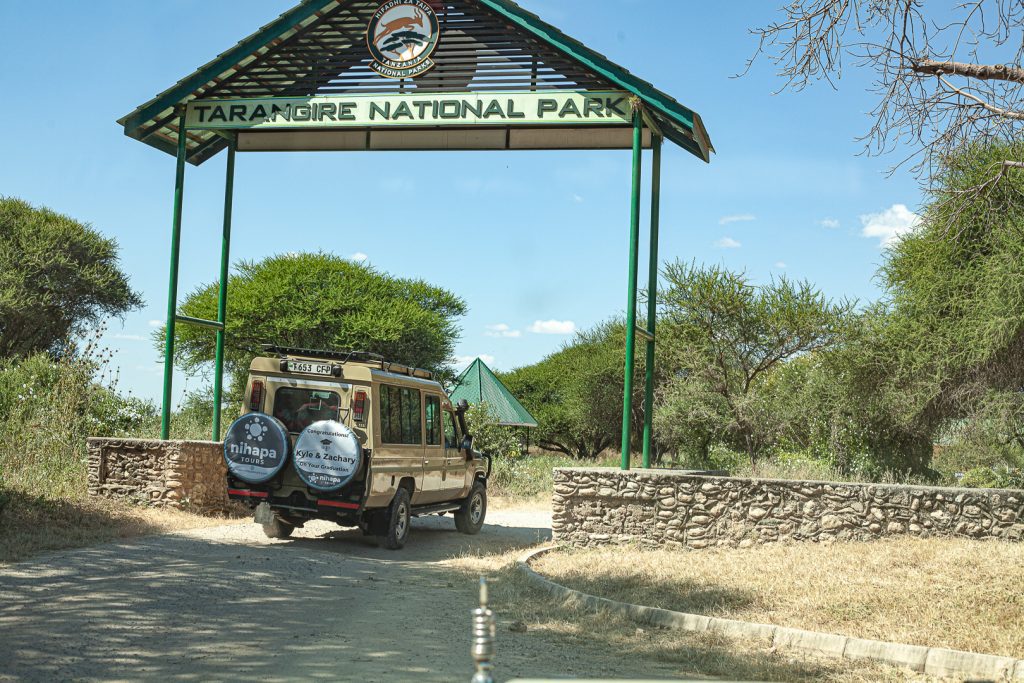
Lake Manyara National Park
Lake Manyara National Park is one of Tanzania’s most scenic and ecologically diverse safari destinations. Although smaller than many of Tanzania’s other national parks, Lake Manyara offers a rich combination of wildlife, beautiful landscapes, and unique safari experiences that make it a popular stop along the northern safari circuit. Located at the base of the Great Rift Valley escarpment, the park is famous for its lush groundwater forests, soda lake ecosystem, and unusual tree-climbing lions.
Covering approximately 330 square kilometers, nearly two-thirds of the park is occupied by Lake Manyara itself, a shallow alkaline lake that attracts thousands of birds and creates spectacular scenery throughout the year. The park’s diverse habitats include groundwater forests, open grasslands, acacia woodlands, swamps, and lakeshore environments that support a wide variety of wildlife species.
One of the park’s most famous attractions is its population of tree-climbing lions. Unlike most lions that rest on the ground, Manyara’s lions are often seen lounging on tree branches during the day. Although tree-climbing behavior is relatively rare among lions, it has become one of Lake Manyara’s defining safari highlights and attracts wildlife enthusiasts hoping to witness this unusual sight.
Lake Manyara is also renowned for its incredible birdlife. The alkaline lake attracts large flocks of flamingos that create beautiful pink reflections across the water during certain seasons. In addition to flamingos, the park hosts more than 400 bird species, making it one of Tanzania’s best birdwatching destinations. Pelicans, storks, hornbills, cormorants, kingfishers, eagles, and herons are commonly spotted throughout the park’s varied habitats.
The groundwater forest near the park entrance is one of Manyara’s most distinctive features. Fed by underground springs flowing from the Rift Valley escarpment, the forest remains green throughout the year and provides habitat for elephants, baboons, blue monkeys, bushbucks, and numerous bird species. Driving through this dense forest creates a completely different atmosphere compared to the open plains found in other northern Tanzania parks.
Lake Manyara National Park is also known for its scenic landscapes and dramatic natural beauty. The towering Rift Valley escarpment forms a stunning backdrop to the lake and surrounding forests, while seasonal changes transform the scenery throughout the year. During the green season, the park becomes especially lush and vibrant, offering excellent photography opportunities.
Canoeing is one of the unique safari activities available in Lake Manyara when water levels are suitable. Canoe safaris allow travelers to experience wildlife and birdlife from a different perspective while exploring the lake’s shoreline quietly and peacefully. Seeing hippos, water birds, and animals along the lakeshore from the water creates a memorable safari experience different from traditional game drives.
Another advantage of Lake Manyara National Park is its accessibility from Arusha. Located approximately two hours from Arusha by road, the park is often included as the first or last stop on northern Tanzania safari itineraries. Its convenient location makes it ideal for day trips, short safaris, or travelers beginning their safari adventure before continuing to Serengeti and Ngorongoro.
Despite its smaller size, Lake Manyara offers impressive wildlife diversity, including elephants, giraffes, buffalo, zebras, hippos, wildebeest, warthogs, baboons, and occasionally leopards and hyenas. The combination of varied ecosystems, birdlife, scenic beauty, and unique wildlife behaviors creates an enjoyable and relaxing safari atmosphere.
Lake Manyara National Park remains one of Tanzania’s most beautiful safari destinations, offering travelers a chance to experience diverse landscapes, excellent birdwatching, unique wildlife encounters, and peaceful safari experiences within a compact yet incredibly rich ecosystem.
Nyerere National Park
Nyerere National Park is one of Africa’s largest and most untouched protected wilderness areas, offering a safari experience defined by space, silence, and raw nature. Once part of the legendary Selous Game Reserve, it was renamed and upgraded to national park status to strengthen conservation and improve wildlife protection. Today, it remains a vast, low-density safari destination where visitors can experience Africa much as it once was—wild, open, and deeply immersive.
At the heart of the park lies the powerful Rufiji River, which shapes the entire ecosystem and supports an incredible concentration of wildlife. This lifeline creates a network of channels, lakes, and floodplains that attract animals year-round, especially during the dry season when water becomes scarce elsewhere. Along its banks, visitors often witness dramatic wildlife scenes, from elephants drinking at sunset to large herds gathering in the shaded riverine forests.
One of the most iconic experiences here is the boat safari. Unlike traditional game drives, exploring the Rufiji River by boat offers a completely different perspective of the wilderness. Gliding along the water brings you close to massive pods of hippos submerged just beneath the surface and crocodiles lying still along sandy banks, perfectly adapted to their environment. Birdlife is equally impressive, with fish eagles, kingfishers, herons, and storks frequently spotted along the waterways. This slow, peaceful style of safari highlights the park’s unique relationship between water and wildlife.
The park is also famous for its walking safaris, a tradition carried over from its Selous heritage. Accompanied by armed rangers and experienced guides, visitors step out of the vehicle and into the bush to experience nature at ground level. This allows for a deeper understanding of animal tracks, plant life, insect behavior, and survival patterns that are often missed on game drives. Walking through untouched terrain creates a strong sense of connection to the environment and a respect for the natural balance of the ecosystem.
For travelers seeking access to remote wilderness with minimal travel time, fly-in safaris are the most efficient and scenic option. Small aircraft land on bush airstrips deep inside the park, offering breathtaking aerial views of winding rivers, open plains, and scattered wildlife below. This approach not only saves time but also enhances the sense of arriving in a truly remote and exclusive destination. It is especially ideal for luxury safaris or multi-park itineraries across southern Tanzania.
Wildlife encounters in Nyerere National Park are shaped by its vast size and low tourist density. Elephants, lions, leopards, buffalo, wild dogs, giraffes, and countless antelope species roam freely across its varied landscapes. Unlike more crowded parks, sightings here often feel private and uninterrupted, with long moments where the only sounds are wind, water, and distant animal calls.
What defines this park most is its sense of wilderness. There are no crowds, no traffic jams of safari vehicles, and no rushed experiences. Instead, visitors are rewarded with space, authenticity, and a slower rhythm of travel that reflects traditional safari values. Whether on a boat drifting along the Rufiji, walking through the bush, or flying over endless green and gold landscapes, Nyerere delivers a safari experience rooted in pure, untouched Africa.
Arusha National Park
Arusha National Park is one of the most accessible safari destinations in northern Tanzania, often chosen for short wildlife experiences or as a gentle introduction before longer journeys into the Serengeti or Ngorongoro. Despite its smaller size, the park offers a remarkable variety of landscapes, from lush montane forests to open savannahs and volcanic terrain shaped by ancient geological activity.
Dominating the skyline is Mount Meru, Tanzania’s second-highest mountain and a dramatic backdrop to nearly every safari experience in the park. Its steep slopes, often wrapped in mist, create a striking contrast to the open plains below. The mountain is not only visually impressive but also plays an important ecological role, feeding the surrounding forests and lakes with rich volcanic soil and water sources that support diverse wildlife.
One of the most unique activities here is canoeing on the Momella Lakes. This peaceful experience allows visitors to glide across shallow alkaline waters while observing wildlife from a completely different perspective. Flamingos often gather along the shores, and waterbirds move gracefully across the surface. Hippos can sometimes be seen submerged in the deeper sections, adding an element of excitement to the calm environment. Canoeing here feels intimate and slow-paced, making it ideal for travelers who enjoy quiet, immersive nature experiences.
The park is also home to the famous black-and-white colobus monkeys, known for their long, flowing fur and striking appearance. Colobus monkeys are frequently seen leaping through the forest canopy, especially in the Ngurdoto Crater area and surrounding woodland trails. Their presence adds a sense of life and movement to the dense forest zones, where sunlight filters through tall trees, and bird calls echo in the background.
Walking safaris are another highlight of Arusha National Park. Accompanied by experienced guides, visitors can explore designated trails on foot, observing animal tracks, unique plant species, and smaller wildlife often missed during vehicle-based safaris. This slower, more traditional style of exploration offers a deeper appreciation of the ecosystem and connects travelers directly to the natural environment.
One of the strongest advantages of Arusha National Park is its accessibility. Located just a short drive from Arusha city, it is ideal for day trips or half-day safaris, making it a popular choice for travelers with limited time. Visitors can experience mountains, lakes, forests, and wildlife all within a single day, without the need for long travel distances.
This combination of scenery, wildlife, and convenience makes Arusha National Park a timeless gateway to Tanzania’s safari experience, blending adventure with ease in a way few other parks can match.
Katavi and Mahale Mountains National Parks
Katavi National Park and Mahale Mountains National Park represent some of the most remote and untouched safari experiences in East Africa, offering a completely different rhythm compared to the more famous northern circuits. These parks are not about convenience or crowds; they are about isolation, raw wilderness, and a deep sense of adventure.
Katavi National Park is known for its vast floodplains and dramatic seasonal changes. During the dry season, wildlife becomes intensely concentrated around shrinking water sources, creating one of the highest densities of animals in Tanzania within a short period. Massive herds of buffalo gather in their thousands, elephants move across the plains in large family groups, and hippos crowd into remaining water pools in astonishing numbers. This seasonal transformation makes Katavi feel almost like a forgotten world of ancient safari landscapes, where nature still follows its original rhythm without interruption.
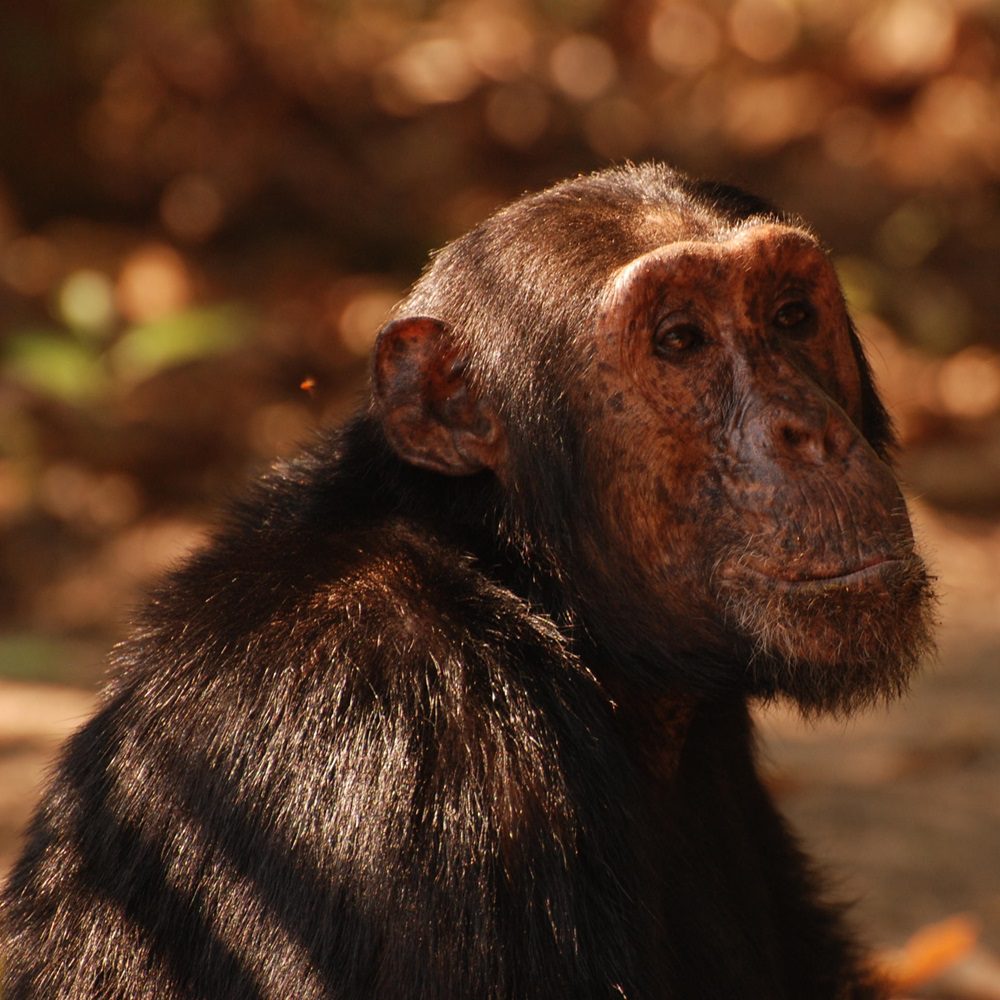
In contrast, Mahale Mountains National Park offers a completely different environment shaped by dense rainforest and the crystal-clear waters of Lake Tanganyika. The park is most famous for chimpanzee trekking, one of the most intimate wildlife experiences in Africa. Guided treks lead visitors deep into forested slopes where habituated chimpanzee families live. Watching them interact, groom each other, and move through the canopy creates a powerful connection to primates in their natural habitat.
Chimpanzee trekking in Mahale is both challenging and rewarding. The terrain is steep and forested, requiring a moderate level of fitness, but the experience of encountering chimpanzees in such a remote setting makes the effort worthwhile. Unlike more commercial wildlife encounters, sightings here feel personal and unhurried, shaped entirely by the movements of the chimps rather than human schedules.
Both parks are defined by their remoteness. Reaching them often involves charter flights followed by boat transfers or long overland journeys, reinforcing the feeling of entering truly untouched territory. There are few lodges, limited infrastructure, and minimal human presence, which preserves the natural character of the landscape and ensures an exclusive safari experience.
For adventure-focused travelers, Katavi and Mahale offer something increasingly rare in modern tourism: genuine wilderness. There are no crowded game drives, no busy viewing points, and no predictable safari routes. Instead, every experience feels exploratory and organic, shaped by weather, wildlife movement, and the natural unpredictability of the environment.
Together, these parks appeal strongly to seasoned safari travelers seeking depth, authenticity, and solitude. Katavi delivers dramatic land-based wildlife concentrations, while Mahale offers immersive primate encounters along one of Africa’s most beautiful lakeshores. Both represent the frontier of Tanzanian safari travel, where adventure is not just part of the journey, it defines it.
Best Times to Visit Tanzania’s National Parks
Tanzania offers rewarding safari experiences throughout the year, but the ideal timing depends on what travelers want to see. The long dry season from June to October is traditionally considered the best overall period, as wildlife gathers around water sources, making sightings easier and more predictable. This is especially true in parks like Serengeti, Ngorongoro, and Nyerere, where game viewing is at its peak.
The short dry season from December to February also provides excellent conditions, with clear skies and warm temperatures, ideal for combining safari with beach extensions in Zanzibar. It is also a key period for calving in the southern Serengeti, attracting predators and dramatic wildlife action.
The green seasons, from March to May and November, bring fewer visitors and lush landscapes. While some areas become more challenging to access, these months offer lower prices and excellent birdwatching opportunities.
Ultimately, each season has its strengths. Choosing the right time depends on whether the focus is migration, photography, or a quieter traditional safari experience rooted in Tanzania’s natural rhythms. Planning ensures the best seasonal safari experience possible today.
Tanzania’s Dry Season Safari Experience
The dry season in Tanzania, running from June to October, is widely regarded as the most reliable and rewarding period for classic safari experiences. Clear skies, minimal rainfall, and thinning vegetation combine to create ideal conditions for wildlife viewing across most major national parks. Animals become easier to locate as they concentrate around permanent water sources, making this period especially popular among first-time safari travelers and wildlife photographers.
One of the most significant advantages of this season is wildlife concentration. As surface water becomes scarce, animals naturally gather in predictable areas such as rivers, lakes, and remaining waterholes. This creates consistent and high-quality sightings of elephants, lions, buffalo, giraffes, and antelope species. In iconic parks like Serengeti National Park, the open plains make it even easier to spot large herds moving across the landscape under golden, dry-season light.
The dry season is also the peak time for river crossings during the Great Migration. Millions of wildebeest and zebra move between the Serengeti and the Maasai Mara ecosystem, with dramatic crossings at the Mara River. These crossings are among the most sought-after wildlife spectacles in the world, often featuring intense predator-prey interactions, especially with crocodiles lying in wait in the deeper channels. The unpredictability of these crossings adds excitement, as herds may gather for hours before suddenly plunging into the water.
Game viewing is generally easier during this time due to shorter grass and reduced foliage. Predators such as lions and leopards are easier to spot, often seen resting under acacia trees or moving across open terrain. This visibility extends across other key destinations such as Ngorongoro Conservation Area, where the dense wildlife population inside the crater ensures excellent sightings year-round, but especially during dry months when animals remain within the crater floor.
Another important characteristic of the dry season is dust. As the land becomes parched, safari vehicles often raise fine dust trails while moving through dirt roads and open plains. While this can occasionally affect photography clarity, it also adds a dramatic and cinematic atmosphere to the safari experience, particularly during sunrise and sunset drives when golden light filters through the haze.
Peak tourism activity also occurs during these months. Lodges and camps in popular areas tend to book out early, and national parks experience higher visitor numbers. Despite this, Tanzania’s vast size ensures that many regions still feel remote and uncrowded compared to other global safari destinations. Planning and early reservations are essential to secure preferred accommodations and routes during this busy season.
The best parks to visit during the dry season include the Serengeti for the migration, Ngorongoro for concentrated wildlife viewing, Tarangire National Park for large elephant herds around the Tarangire River, and Nyerere National Park for boat safaris along the Rufiji River, where animals gather along receding water channels.
Overall, the dry season represents the most traditional and visually rewarding safari experience in Tanzania. It is a time when nature becomes more visible, movement becomes predictable, and every game drive carries a higher chance of witnessing iconic African wildlife moments in their purest form.
Green Season Safaris in Tanzania
The green season in Tanzania, from November to May, presents a completely different side of the safari experience, one defined by lush landscapes, dramatic skies, and a quieter rhythm across the parks. While some travelers traditionally favor the dry months, the green season has its own strong appeal, especially for those seeking photography, birdwatching, and a more exclusive safari atmosphere.
During this period, the rains transform the savannah into a vibrant carpet of green. Grasslands grow tall, acacia trees regain their leaves, and rivers swell with fresh water. The scenery becomes especially striking in parks like Serengeti National Park, where the vast plains shift from golden tones to rich emerald landscapes. Storm clouds often build in the afternoons, creating dramatic lighting conditions that are highly valued by photographers.
One of the most important highlights of the green season is the calving period, which typically occurs in the southern Serengeti between January and March. Thousands of wildebeest give birth within a short window, attracting large numbers of predators such as lions, cheetahs, and hyenas. This creates one of the most intense wildlife interactions in Africa, as newborn calves must stand and run within minutes of birth to survive. The concentration of life, vulnerability, and predation makes this a powerful and emotional wildlife spectacle.
Birdwatching is another major advantage of visiting during the green season. Migratory bird species arrive from Europe and other regions, joining resident species across wetlands, forests, and lakes. Areas such as Lake Manyara National Park become especially active, with large flocks of flamingos, storks, pelicans, and other waterbirds gathering along the alkaline lakes. The abundance of water and vegetation creates ideal conditions for bird diversity and observation.
Another key benefit of this season is the reduction in tourist numbers. With fewer visitors in the parks, game drives feel more private and flexible. Safari vehicles are less frequent at sightings, allowing for longer and more uninterrupted wildlife observation. This quieter environment appeals strongly to travelers who prefer a more intimate and less commercial safari experience.
Photography opportunities during the green season are exceptional. The combination of fresh vegetation, reflective water surfaces, and dramatic storm lighting creates highly dynamic compositions. Wildlife contrasts beautifully against green backdrops, and dust-free air improves clarity and color saturation. Even rainy moments can enhance the visual story, as animals move through wet landscapes under moody skies.
In addition to visual benefits, many safari lodges and camps offer reduced rates during this period. This makes the green season an attractive option for travelers seeking high-quality experiences at more accessible pricing. Luxury accommodations, which are often fully booked in peak months, are more readily available, allowing for greater flexibility in planning itineraries.
While occasional rain showers are expected, they are usually short and followed by clear periods. Roads in some remote areas may become more challenging, but most major parks remain accessible and operational throughout the season.
Overall, the green season reveals a softer, more vibrant version of Tanzania’s wilderness. It is a time of renewal, birth, and abundance, where landscapes come alive, and wildlife behavior becomes especially dynamic. For those willing to embrace changing conditions, it offers one of the most rewarding and visually rich safari experiences in Africa.
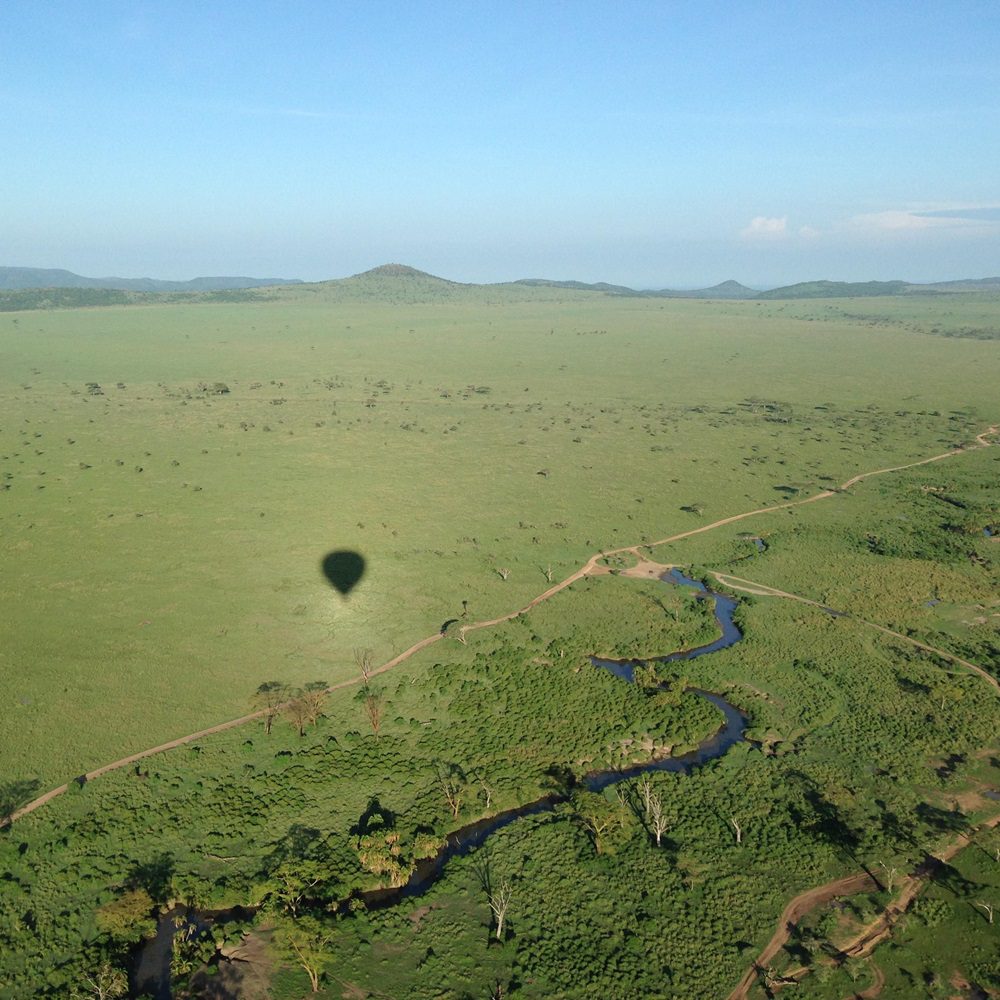
The Great Wildebeest Migration
The Great Wildebeest Migration is one of the most remarkable natural events on Earth, driven by ancient survival instincts rather than fixed routes or schedules. Over 1.5 million wildebeest, joined by hundreds of thousands of zebras and gazelles, move continuously through the Serengeti ecosystem in search of fresh grazing and water. This cycle is not a single event but a year-round movement shaped by rainfall patterns, predator pressure, and grass regeneration.
At the heart of this movement is a continuous migration cycle that loops through the Serengeti in Tanzania and the Maasai Mara in Kenya. The herds are always in motion, but their locations shift predictably across seasons. From the southern plains to the western corridors, then northward toward river crossings, and finally back again, the migration follows nature’s rhythm rather than human-defined borders.
One of the most dramatic phases of this cycle is the calving season, which takes place in the southern Serengeti between January and March. During this period, vast herds gather on nutrient-rich short-grass plains, where thousands of calves are born within a short timeframe. This synchronized birthing strategy helps overwhelm predators and improve survival rates. However, it also creates intense predator activity, as lions, hyenas, and cheetahs take advantage of the abundance of vulnerable young animals. The calving season is often described as both beautiful and brutal, showcasing the raw balance of life in the wild.
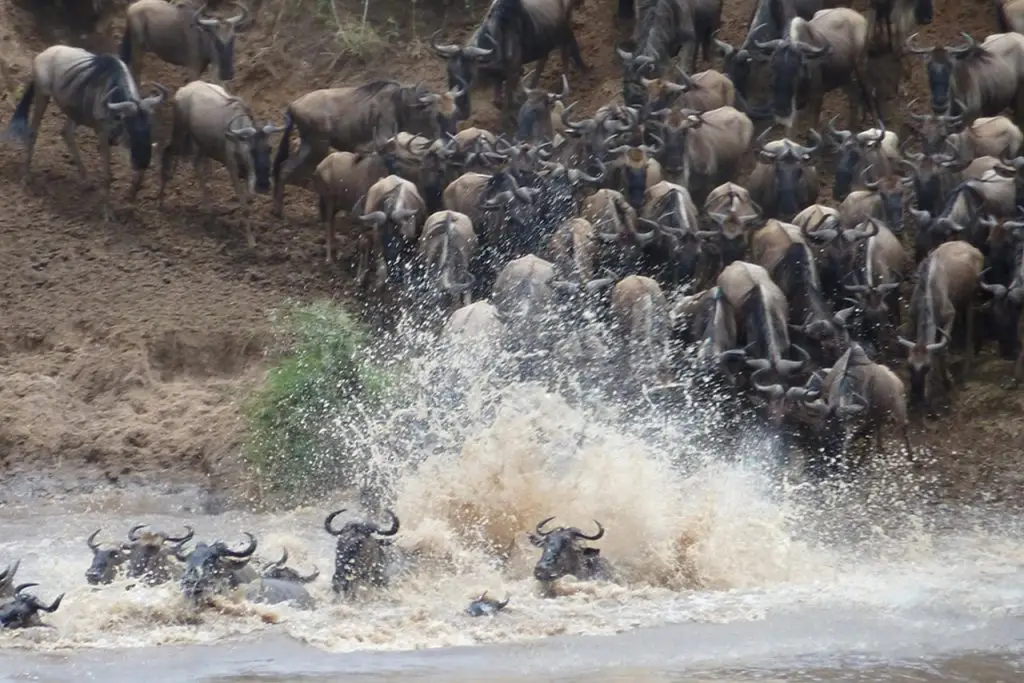
As the dry season progresses, the herds begin moving northwest toward the Western Corridor, where the first major river challenge appears: the Grumeti River. The Grumeti crossings, typically occurring between May and July, are smaller in scale than the Mara River crossings but equally dramatic. Large crocodiles lie in wait beneath the muddy waters, and the herds often hesitate before crossing. When movement finally begins, chaos follows, dust, noise, and sudden bursts of panic as wildebeest attempt to navigate strong currents and hidden predators.
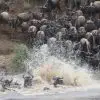
Later in the year, the migration reaches its most famous and highly anticipated stage: the Mara River crossings. These crossings, generally occurring between July and October, are the defining moment of the entire migration cycle. Massive herds gather on riverbanks, often delaying for hours or even days before committing to the water. Once the first animals jump, the rest follow in explosive waves. Strong currents, steep banks, and large Nile crocodiles make this one of the most dangerous natural obstacles in the animal kingdom. The unpredictability of when and where crossings happen adds to the tension and excitement of witnessing this event in person.
Predator interactions are constant throughout the migration cycle. Lions track herds across open plains, cheetahs exploit open grasslands during calving season, and hyenas use endurance and numbers to isolate weaker individuals. Crocodiles dominate river crossing points, while scavengers follow behind to clean up remains. This constant pressure shapes herd behavior and movement patterns, making the migration a continuous survival strategy rather than a simple journey.
The best time for migration safaris depends on what aspect of the cycle travelers wish to experience. January to March is ideal for calving in the southern Serengeti. April to June offers dramatic movement through the central and western regions, including the Grumeti River crossings. July to October is the peak season for witnessing Mara River crossings in the northern Serengeti. November and December mark the return of herds to the southern plains, completing the cycle.
Different regions of the Serengeti are best at different times of year. The southern plains around Ndutu are most active during calving season. The central Serengeti remains productive year-round, offering resident wildlife and transitional herd movements. The western corridor becomes critical during the Grumeti crossings, while the northern Serengeti is the prime location for Mara River drama. Each region plays a vital role in the migration’s continuous loop.
The Great Wildebeest Migration is not a single spectacle but a living system that changes constantly across time and space. It represents one of nature’s most powerful survival stories, where movement, instinct, and environment are tightly connected. For safari travelers, understanding its rhythm is key to experiencing its most unforgettable moments at the right place and the right time.
Weather Patterns Across Tanzania
Tanzania’s weather patterns vary significantly across regions, shaped by altitude, proximity to the ocean, and seasonal rainfall cycles. Understanding these differences is essential for planning safaris, as conditions directly influence wildlife movement, road accessibility, and overall travel experience.
In the northern circuit, which includes parks such as Serengeti National Park, Ngorongoro Conservation Area, Tarangire National Park, and Arusha National Park, the climate is generally mild due to higher elevation. Days are warm and comfortable, while nights and early mornings can be cool, especially around Ngorongoro’s crater rim. Rainfall is seasonal, with the long rains typically occurring from March to May and the short rains arriving around November to December. The dry months from June to October offer clear skies and excellent visibility for game viewing.
The southern circuit, including Nyerere National Park, Ruaha National Park, and Katavi, experiences a hotter and more humid climate. Temperatures here are generally higher than in the north, especially during the dry season when heat builds across the savannah. Rainfall is more intense and can be less predictable in remote areas, but it follows the same general seasonal pattern of long rains (March–May) and short rains (November–December). During the dry season, wildlife concentrates around rivers such as the Rufiji and Ruaha, making conditions ideal for game viewing despite the heat.
Along the coastal regions, including Dar es Salaam, Bagamoyo, and the islands of Zanzibar, the climate is tropical and consistently humid throughout the year. Temperatures remain warm with little variation, and humidity is higher compared to inland safari regions. Rainfall is more pronounced during the long rains, while coastal areas also experience the short rainy season. Despite this, the coast remains accessible year-round, with ocean breezes providing some relief from the heat. Zanzibar, in particular, benefits from a steady tropical climate that supports beach tourism in most months.
Across all regions, Tanzania follows two main rainfall seasons: the long rains (March to May) and the short rains (November to December). These rains shape the landscape, turning dry plains into lush green environments and influencing animal migration patterns. The dry season, from June to October, remains the most stable period for safaris, with minimal rainfall and predictable wildlife concentrations.
Temperature differences across the country are strongly influenced by altitude. Highland areas like Ngorongoro are cooler and sometimes misty, while lowland parks such as Nyerere and Ruaha are significantly hotter. Coastal areas remain warm and humid year-round, creating a distinct contrast with inland safari destinations.
Together, these varied weather patterns create a dynamic safari environment where each region and season offers a different experience. Understanding these climatic shifts allows travelers to match their itinerary with the most suitable conditions, ensuring a well-balanced and rewarding journey through Tanzania’s diverse landscapes.
Wildlife Encounters and Activities in Each Park
Tanzania’s national parks offer distinct wildlife experiences, with each destination delivering its own signature encounters shaped by landscape and ecosystem diversity.
In the north, Serengeti National Park is best known for the Great Migration and predator action, while the Ngorongoro Crater concentrates an extraordinary density of wildlife in a compact volcanic basin. Tarangire National Park stands out for large elephant herds and seasonal wildlife gatherings along the Tarangire River, and Arusha National Park offers walking safaris, canoeing, and colobus monkey sightings in a more intimate setting.
In the south, Nyerere National Park is defined by boat safaris on the Rufiji River, walking safaris, and wide-ranging wilderness game drives. Ruaha National Park offers rugged, less-crowded safari experiences with strong predator populations and dramatic landscapes.
Farther west, Katavi delivers dense dry-season wildlife concentrations, while the Mahale Mountains provide rare chimpanzee trekking experiences along the shores of Lake Tanganyika.
Across all parks, activities range from classic game drives and boat safaris to walking expeditions and primate trekking. This diversity ensures every traveler can experience Tanzania’s wildlife from multiple perspectives, combining iconic sightings with immersive, close-range encounters in some of Africa’s most authentic wilderness areas.
The Big Five in Tanzania
The Big Five- lion, leopard, elephant, buffalo, and rhino—remain one of the most sought-after wildlife groupings in Tanzania, symbolizing both the richness of its ecosystems and the enduring appeal of classic African safaris. While once a hunting term, today it represents a conservation success story and a benchmark for wildlife viewing across the country’s protected areas.
Lions are the most commonly encountered of the Big Five in Tanzania and are widely distributed across major safari parks. The strongest populations are found in Serengeti National Park, where large prides roam open plains and follow migrating herds. Lions are also frequently seen in the Ngorongoro Crater, where prey density is high, and sightings are reliable throughout the year. In Tarangire and Ruaha, they are often observed in more rugged, less crowded environments, offering a more remote viewing experience.
Leopards are the most elusive members of the Big Five, known for their solitary and secretive nature. The best chances of spotting them are in the Serengeti, particularly in riverine areas and kopjes where they rest in trees during the day. Serengeti National Park remains the premier destination for leopard sightings, while Ruaha and Nyerere also offer strong opportunities in quieter, less disturbed habitats.
Elephants are among the most iconic and widely distributed species in Tanzania. Large herds are especially prominent in Tarangire National Park, where seasonal migration brings thousands of elephants to the Tarangire River during the dry season. They are also commonly seen in Nyerere and Ruaha, where vast landscapes allow for free movement of large family groups. Elephants in Tanzania often display relaxed behavior, offering excellent photographic opportunities.
Buffalo are widespread and typically found in large herds across multiple parks. The Ngorongoro Crater hosts some of the most concentrated buffalo populations, while Serengeti and Nyerere also support strong numbers. Their presence often attracts predators, making buffalo herds a key part of the broader ecological balance within safari ecosystems.
Rhinos, particularly black rhinos, are the rarest of the Big Five in Tanzania. The most reliable location for sightings is the Ngorongoro Crater, where a protected population has been carefully conserved. Due to poaching pressures in the past, rhino numbers remain limited, and sightings are less frequent compared to other members of the Big Five. However, Ngorongoro offers one of the best opportunities in East Africa to observe them in a controlled and protected environment.
Each of Tanzania’s major safari parks contributes differently to the Big Five experience. The Serengeti delivers predator-rich open plains, Ngorongoro provides concentrated and reliable sightings, Tarangire highlights elephant behavior, and southern parks like Ruaha and Nyerere offer more remote and authentic encounters. Together, they create a complete Big Five circuit that reflects both ecological diversity and strong conservation efforts.
Ultimately, Tanzania remains one of the most rewarding destinations in Africa for Big Five safaris, combining accessibility, wildlife density, and varied landscapes that ensure memorable encounters across every region.
Predator Encounters
Tanzania is one of Africa’s strongest predator landscapes, offering consistent opportunities to observe hunting behavior, territorial dynamics, and complex predator-prey interactions across multiple ecosystems. From open plains to dense woodlands, predators play a central role in maintaining ecological balance and shaping safari experiences.
Cheetahs are best known for their speed and daytime hunting strategy. They rely on open landscapes to stalk and chase prey, often targeting small to medium antelope such as gazelles. The Serengeti, especially its central and southern plains, provides ideal hunting terrain due to its short grass and wide visibility. During the calving season, cheetahs benefit from increased prey vulnerability, making this one of the best times to observe active hunts and high-energy chases. Their success depends on short bursts of speed rather than endurance, and sightings often unfold in dramatic but brief encounters.
Hyenas are highly intelligent and socially complex predators, often underestimated despite their dominance in many ecosystems. Spotted hyenas hunt in coordinated groups but are also efficient scavengers, capable of both killing and stealing from other predators. They are particularly active in the Serengeti and Ngorongoro Crater, where they compete directly with lions for food. Their vocalizations at night and cooperative hunting strategies make them one of the most frequently observed predators in Tanzania’s safari circuits.
African wild dogs, also known as painted wolves, are among the rarest and most endangered predators in East Africa. They are highly efficient pack hunters, relying on teamwork, endurance, and communication to bring down prey. The best opportunities to see them are in more remote parks such as Ruaha National Park and Nyerere National Park, where low human disturbance allows packs to roam freely. Their hunting behavior is highly coordinated, often involving long chases that test the stamina of both predator and prey.
Lions and leopards also play a dominant role in Tanzania’s predator hierarchy. Lions typically hunt in groups, using teamwork to ambush larger prey, while leopards rely on stealth and solitary ambush tactics, often dragging kills into trees to avoid competition. Their behavior reflects different survival strategies within the same ecosystem, and both are widely distributed across major parks.
The best parks for predator encounters include the Serengeti for overall diversity and density, Ngorongoro Crater for reliable sightings in a contained ecosystem, and Ruaha and Nyerere for more wild, less predictable interactions. Each park offers a different lens on predator behavior, from highly visible hunts on open plains to rare, uninterrupted sequences in remote wilderness areas.
Overall, predator encounters in Tanzania are not just about sightings but about witnessing natural systems in motion. Hunting, cooperation, competition, and survival all unfold in real time, offering some of the most powerful and memorable moments in African wildlife travel.
Bird Watching in Tanzania
Tanzania is one of Africa’s richest birding destinations, with more than 1,100 recorded species across its varied ecosystems. From alkaline lakes to montane forests and open savannahs, the country offers exceptional diversity for both casual observers and dedicated birdwatchers.
One of the most iconic sights is the gathering of flamingos, especially in alkaline lakes such as those found in Lake Manyara National Park. These lakes often turn pink when thousands of lesser and greater flamingos feed on algae-rich waters. Their synchronized movement across shallow lakes creates one of the most visually striking birding scenes in East Africa, particularly during wetter seasons when water levels support large feeding flocks.
Tanzania is also home to a wide variety of raptors, including African fish eagles, martial eagles, bateleurs, and peregrine falcons. These birds of prey are commonly seen across major parks such as the Serengeti and Tarangire, where open landscapes provide ideal hunting grounds. The African fish eagle, in particular, is often spotted near rivers and lakes, using its powerful talons to catch fish with remarkable precision.
The country’s forests and highlands support many endemic and near-endemic species, particularly in isolated ecosystems like the Eastern Arc Mountains and volcanic regions. Species such as the Udzungwa forest partridge and Usambara sunbird are highly sought after by birding enthusiasts due to their limited range and rarity. These habitats provide critical refuge for specialized birdlife that cannot be found elsewhere in East Africa.
The best birding parks in Tanzania span a wide range of environments. Arusha National Park is excellent for forest and waterbird species, while Tarangire National Park offers seasonal wetlands that attract large migratory populations. The Serengeti provides a mix of raptors, bustards, and grassland species, while southern parks like Nyerere add riverine and wetland diversity. Coastal and lake regions further enhance the country’s birding appeal with marine and freshwater species.
Bird watching in Tanzania is highly seasonal, with the period from November to April offering the richest diversity due to the presence of migratory species from Europe and Asia. However, resident species can be observed year-round, ensuring consistent opportunities regardless of travel time.
Overall, Tanzania delivers a world-class birding experience where landscapes, seasons, and ecosystems combine to support an extraordinary range of species.
Walking Safaris
Walking safaris in Tanzania offer one of the most traditional and immersive ways to experience the African wilderness. Unlike vehicle-based game drives, walking safaris bring travelers directly into the natural environment, where every sound, track, and movement becomes part of the experience. This style of safari is guided by highly trained rangers and expert naturalists who interpret the bush in real time, turning a simple walk into a detailed exploration of ecology and wildlife behavior.
Ruaha National Park is one of the best destinations for walking safaris due to its vast, untouched landscapes and low visitor density. Here, walks often take place in remote areas where large mammals such as elephants, buffalo, and giraffes roam freely. The sense of scale in Ruaha is striking, and walking through its rugged terrain offers a deeper appreciation of how wildlife survives in a harsh, dry environment.
Nyerere National Park also provides exceptional walking safari opportunities, particularly in its riverine and woodland ecosystems. The experience here is often complemented by the presence of the Rufiji River nearby, where wildlife tracks, birdlife, and freshwater habitats create a dynamic and varied walking environment. Encounters are carefully managed, with safety always prioritized by experienced armed rangers who understand animal behavior and territory movement.
In contrast, Arusha National Park offers a more accessible introduction to walking safaris. Its diverse landscapes—including montane forest, volcanic craters, and open grasslands—allow visitors to explore shorter, guided walks suitable for a wider range of fitness levels. The presence of colobus monkeys, forest birds, and unique plant life makes it an ideal location for learning about ecosystems at close range.
Safety is a central part of all walking safaris in Tanzania. Every walk is led by trained rangers who are skilled in tracking wildlife, reading environmental signals, and maintaining safe distances from potentially dangerous animals. Clear protocols are followed at all times, ensuring that visitors can focus on observation and learning without unnecessary risk. Walking groups are typically small, allowing for better communication and a more personalized experience.
Ranger-led experiences are what truly define walking safaris. Guides share knowledge about animal tracks, medicinal plants, insect life, and survival strategies used by both predators and prey. This transforms the bush into an open classroom where even the smallest details carry meaning. The slower pace encourages observation and connection, revealing aspects of the wilderness that are often missed from a vehicle.
Ultimately, walking safaris in Tanzania represent a return to the roots of exploration. They offer a quiet, grounded, and highly educational way to experience the wild, guided by those who understand the land intimately and respect its natural balance.
Hot Air Balloon Safaris
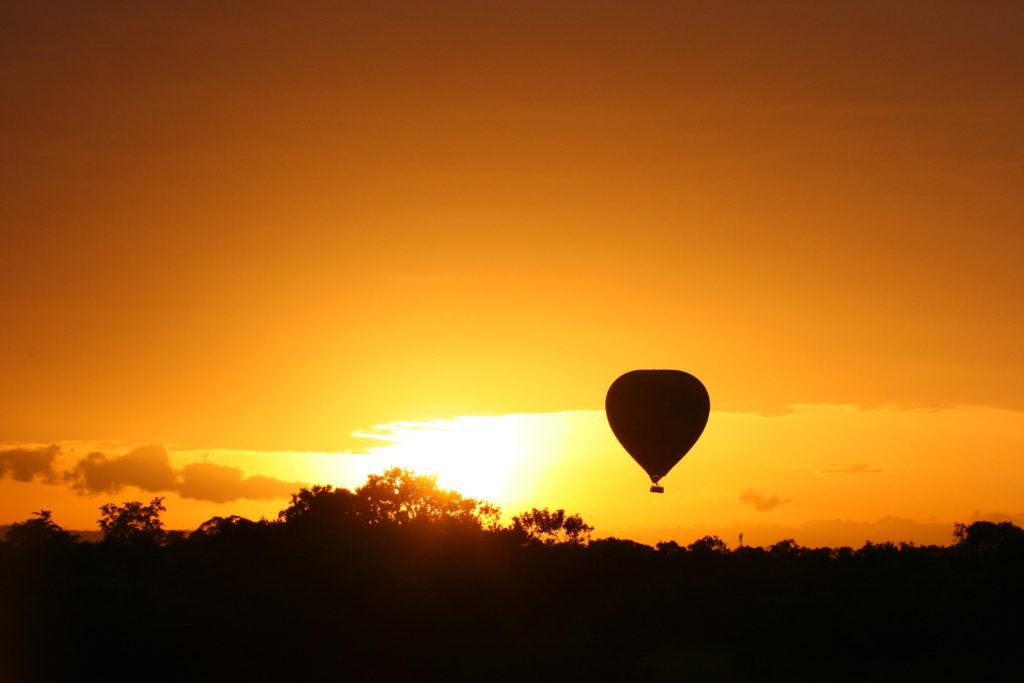
Hot air balloon safaris in Tanzania offer one of the most refined and visually spectacular ways to experience the wilderness, combining adventure with luxury in a truly unforgettable setting. The most iconic location for this experience is Serengeti National Park, where vast open plains provide ideal conditions for early morning flights and panoramic wildlife viewing.
The experience begins before sunrise, when guests are transferred to the launch site in the dark. As the balloon inflates and rises slowly into the early morning sky, the first light of day begins to reveal the landscape below. This sunrise ascent is one of the most magical moments of any safari, as golden light spreads across the savannah and wildlife begins to move after the cool night.
From above, the Serengeti transforms into a living map of movement and life. Herds of wildebeest, zebra, and gazelle appear as shifting patterns across the plains, while elephants and giraffes move slowly through scattered acacia woodlands. The silence of the balloon flight adds to the sense of peace, broken only by occasional bursts of the burner as the pilot adjusts altitude. It is a completely different perspective from traditional game drives, offering scale and beauty that can only be appreciated from the air.
Photography opportunities during balloon safaris are exceptional. The soft morning light, combined with wide-angle views of the landscape, creates ideal conditions for capturing both wildlife and scenery. The elevated viewpoint allows for unique compositions, including sweeping river lines, migration herds, and the dramatic contrast between open plains and isolated trees.
After landing, the experience continues with a traditional bush breakfast served in the wild. This often includes champagne and freshly prepared meals set up in a remote location, reinforcing the sense of exclusivity and celebration. It is a classic safari tradition that adds a luxurious finishing touch to the flight.
Hot air balloon safaris are considered one of the premium experiences in Tanzanian tourism, appealing to travelers seeking comfort, exclusivity, and unforgettable visual moments. While available at an additional cost, the experience is often regarded as a highlight of a Serengeti itinerary, particularly for honeymooners, photographers, and luxury safari travelers.
Overall, balloon safaris provide a rare combination of silence, scale, and sunrise beauty, making them one of the most iconic and elegant ways to witness Tanzania’s wilderness from above.
Cultural Experiences Near National Parks
Cultural experiences around Tanzania’s national parks add depth to the safari journey, connecting wildlife exploration with the living traditions of communities who have shared these landscapes for generations. These encounters offer meaningful insight into history, lifestyle, and survival in environments shaped by nature and time.
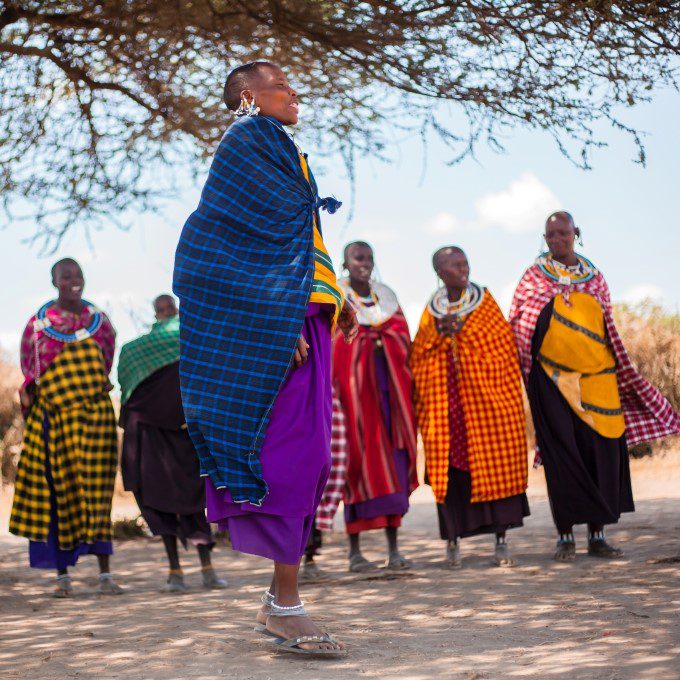
The Maasai people are among the most well-known communities in East Africa, often found near major northern circuit parks such as Serengeti National Park and the Ngorongoro region. Visiting a Maasai village, or boma, offers a glimpse into traditional pastoral life, including cattle herding, beadwork, dancing, and storytelling. Their deep connection to livestock and open rangelands reflects a lifestyle that has remained largely unchanged for centuries.
In contrast, the Hadzabe cohort near Lake Eyasi represents one of the last remaining hunter-gatherer communities in Africa. They live in small groups and rely on traditional hunting techniques and foraging skills to survive. Visitors can join early morning excursions to observe or participate in hunting demonstrations and learn how the Hadzabe use bows, arrows, and natural knowledge of the land to sustain their way of life. Their language, social structure, and daily routines offer a rare and authentic cultural experience.
Nearby, the Datoga community is known for its skilled blacksmithing and craftsmanship. They often live in the same region as the Hadzabe and are recognized for producing traditional tools, jewelry, and weapons using recycled metal. Observing the blacksmithing process provides insight into a highly specialized craft that supports both cultural identity and practical survival. Their cattle-based lifestyle also reflects strong ties to pastoral traditions similar to but distinct from the Maasai.
Around Arusha and the northern highlands, coffee tours are a popular cultural activity, especially for travelers beginning or ending their safari. Small-scale farms allow visitors to walk through plantations, learn about cultivation methods, and participate in roasting and tasting processes. These tours highlight Tanzania’s agricultural heritage and the importance of coffee as both a local livelihood and an export product.
While these cultural experiences are highly rewarding, cultural respect is essential. Visitors are encouraged to approach communities with openness and sensitivity, understanding that these are living cultures, not staged performances. Photography should always be done with permission, and interactions should be guided by local hosts who ensure authenticity and dignity are maintained. Supporting community-based tourism projects also helps ensure that benefits are shared directly with local people.
Together, these cultural experiences complement Tanzania’s wildlife safaris by offering a human context to the landscapes. They create a more complete journey, one that blends nature, tradition, and everyday life into a deeper understanding of the regions surrounding the national parks.
Planning Your Visit: Tips and Considerations
Careful planning is essential for a smooth and rewarding safari experience in Tanzania, as logistics, seasons, and park distances can significantly influence your itinerary. Choosing the right travel period is the first step, with the dry season offering the most predictable wildlife viewing, while the green season provides fewer crowds and lush scenery.
It is important to design your route efficiently, especially when combining northern parks like Serengeti National Park and Ngorongoro with more remote destinations such as Nyerere National Park or Ruaha. Internal flights can save time and reduce long road transfers.
Accommodation should be booked early during peak months (June to October), as high-demand lodges fill quickly. Travelers should also consider safari style, whether luxury lodges, tented camps, or mobile migration camps, based on comfort and experience expectations.
Packing light, breathable clothing, neutral colors, and essential gear like binoculars and sunscreen is recommended. Health precautions, including travel insurance and vaccinations, should be arranged in advance.
Ultimately, successful safari planning balances timing, budget, and expectations, ensuring a well-structured journey through Tanzania’s diverse and iconic wilderness areas.
How to Choose the Right Safari Circuit
Choosing the right safari circuit in Tanzania depends on travel goals, budget, available time, and the type of wildlife experience desired. Each circuit offers a distinct style of safari, shaped by geography, accessibility, and ecosystem diversity.
The northern circuit is the most popular and developed safari route, featuring iconic destinations such as Serengeti National Park, Ngorongoro Crater, Tarangire, and Lake Manyara. This region is ideal for first-time visitors due to its excellent infrastructure, high wildlife density, and reliable game viewing throughout the year. The northern circuit is also home to the Great Migration, making it the top choice for witnessing river crossings and predator action. However, it tends to be more expensive due to higher demand and premium accommodation options.
The southern circuit, including Nyerere National Park and Ruaha, offers a more remote and authentic safari experience. It is less crowded, with vast landscapes and lower tourist density. Wildlife encounters here feel more natural and spread out, with strong opportunities for boat safaris, walking safaris, and sightings of predators in undisturbed habitats. This circuit is often more affordable than the north and appeals to travelers seeking solitude and wilderness immersion.
The western circuit, featuring Katavi and Mahale Mountains, is the most remote and adventurous option. Access typically requires fly-in logistics, and visitor numbers are very low. Katavi is known for dramatic seasonal wildlife concentrations, while Mahale offers rare chimpanzee trekking experiences along Lake Tanganyika. This circuit is best suited for experienced travelers seeking exclusivity, raw nature, and unique primate encounters.
Budget differences between circuits are largely driven by accessibility and demand. The northern circuit has the widest price range, from mid-range to ultra-luxury lodges. The southern circuit generally offers better value for money with fewer crowds and competitive lodge pricing. The western circuit is typically the most expensive due to flight costs and limited accommodation, but it delivers unmatched exclusivity.
Wildlife styles also vary across regions. The north is defined by predictable sightings and migration drama. The south emphasizes raw, untamed ecosystems with dynamic predator behavior. The west focuses on extreme wilderness, large seasonal gatherings, and rare primate experiences. Each circuit provides a different lens on Tanzania’s biodiversity.
Ultimately, selecting the right circuit depends on whether travelers prioritize iconic wildlife events, solitude, affordability, or rare experiences. Tanzania’s strength lies in its diversity, allowing each circuit to deliver a distinct and memorable safari journey.
Safari Accommodation Options
Tanzania offers a wide range of safari accommodation options, designed to suit different travel styles, budgets, and expectations. From ultra-luxury lodges overlooking vast savannahs to simple camping setups deep in the wilderness, each category provides a unique way to experience the country’s national parks.
Luxury lodges represent the highest level of comfort and service in the safari industry. These properties are often located in prime wildlife areas such as Serengeti National Park or Ngorongoro, offering panoramic views, private decks, gourmet dining, and personalized service. Many luxury lodges include features such as infinity pools, spa treatments, and private guides, creating a seamless blend of wilderness and high-end hospitality. They are ideal for travelers seeking exclusivity and comfort without compromising proximity to wildlife.
Mid-range camps provide a balanced safari experience, combining comfort with authenticity. These tented camps often feature en-suite bathrooms, proper beds, and structured dining areas while still maintaining a close connection to nature. They are commonly found across both northern and southern circuits, offering reliable service and good access to game-viewing areas. Mid-range options are popular among couples and small groups who want comfort without luxury pricing.
Budget camping is the most traditional and adventurous form of safari accommodation. Travelers stay in basic tents within designated campsites inside or near national parks. Facilities are simple, often shared, and meals are prepared by camp staff or guides. While less comfortable, this style offers a highly immersive experience, especially for those who want to feel fully connected to the wilderness environment.
Mobile camps follow wildlife movements, particularly the Great Migration in the Serengeti. These seasonal camps are relocated throughout the year to position guests close to active herds. They combine comfort with strategic location, offering en-suite tents, proper bedding, and guided activities. Mobile camps are especially valuable during peak migration periods, such as calving season or river crossings, ensuring guests are always near the action.
Family lodges are designed to accommodate travelers with children or larger groups. These properties often include interconnected rooms, family suites, swimming pools, and flexible meal arrangements. Safety and convenience are prioritized, with activities tailored to suit younger guests. Parks like Tarangire and Manyara are particularly popular for family safaris due to their accessibility and shorter travel distances.
Honeymoon lodges focus on privacy, romance, and exclusive experiences. These lodges often feature secluded suites, private plunge pools, outdoor bathtubs, and candlelit dinners under the stars. Locations are carefully chosen to maximize privacy and scenic beauty, making them ideal for couples celebrating special occasions. The Serengeti and Ngorongoro highlands are especially favored for romantic safari escapes.
Overall, Tanzania’s accommodation landscape ensures that every traveler can find a suitable option, whether prioritizing luxury, adventure, affordability, or intimacy. The variety of lodges and camps enhances the safari experience, allowing guests to match their stay with their preferred style of exploration and comfort level.

Choosing the Right Safari Operator
Selecting the right safari operator is one of the most important decisions when planning a trip to Tanzania, because it directly influences guide quality, safety, flexibility, and the overall experience in the parks. A well-chosen operator ensures smooth logistics and meaningful wildlife encounters, while a poor choice can limit the quality of the entire journey.
Guide quality is the heart of any safari. The best operators invest in experienced driver-guides who understand animal behavior, track wildlife effectively, and know the parks intimately. A strong guide can transform a simple game drive into a storytelling experience, identifying species quickly, positioning vehicles for photography, and interpreting animal interactions in real time. Consistency also matters; operators who assign the same guide throughout the trip often provide a more personalized and reliable experience.
Reviews are another essential factor. Verified feedback across independent platforms and travel forums gives insight into real guest experiences. Strong operators usually have long-term, consistent reviews that mention specific guides, itineraries, and wildlife sightings. These details are more reliable than generic praise, as they reflect actual on-ground performance rather than marketing claims.
Sustainability is increasingly important in Tanzania’s safari industry. Responsible operators support conservation efforts, follow park regulations, minimize environmental impact, and often contribute to local communities. Choosing an operator that respects wildlife and promotes ethical tourism helps preserve the parks for future generations while also ensuring a more authentic experience.
When deciding between a private safari and a group safari, the key difference lies in flexibility and exclusivity. Private safaris offer a dedicated vehicle and guide, allowing travelers to adjust timing, spend longer at sightings, and customize the experience. Group safaris follow fixed itineraries and shared vehicles, making them more budget-friendly but less flexible. The choice depends on budget and travel style, but private safaris are generally preferred for families, photographers, and honeymoon travelers.
Custom itineraries are another sign of a high-quality operator. The best safari companies do not offer one-size-fits-all packages; instead, they design trips based on interests such as the Great Migration, birdwatching, cultural experiences, or luxury travel. Flexibility in planning allows travelers to combine different parks, accommodation styles, and activities for a more personalized journey.
A strong example of a trusted operator in this space is Nihapa Tours, which focuses on tailored safari experiences across Tanzania. With a strong emphasis on personalized planning, guide expertise, and well-structured itineraries, it represents the type of operator that prioritizes both experience quality and attention to detail.
Ultimately, choosing the right safari operator is about trust, transparency, and expertise. The best decision is one that balances professional guidance, proven reputation, ethical practices, and the ability to customize the journey according to individual expectations.
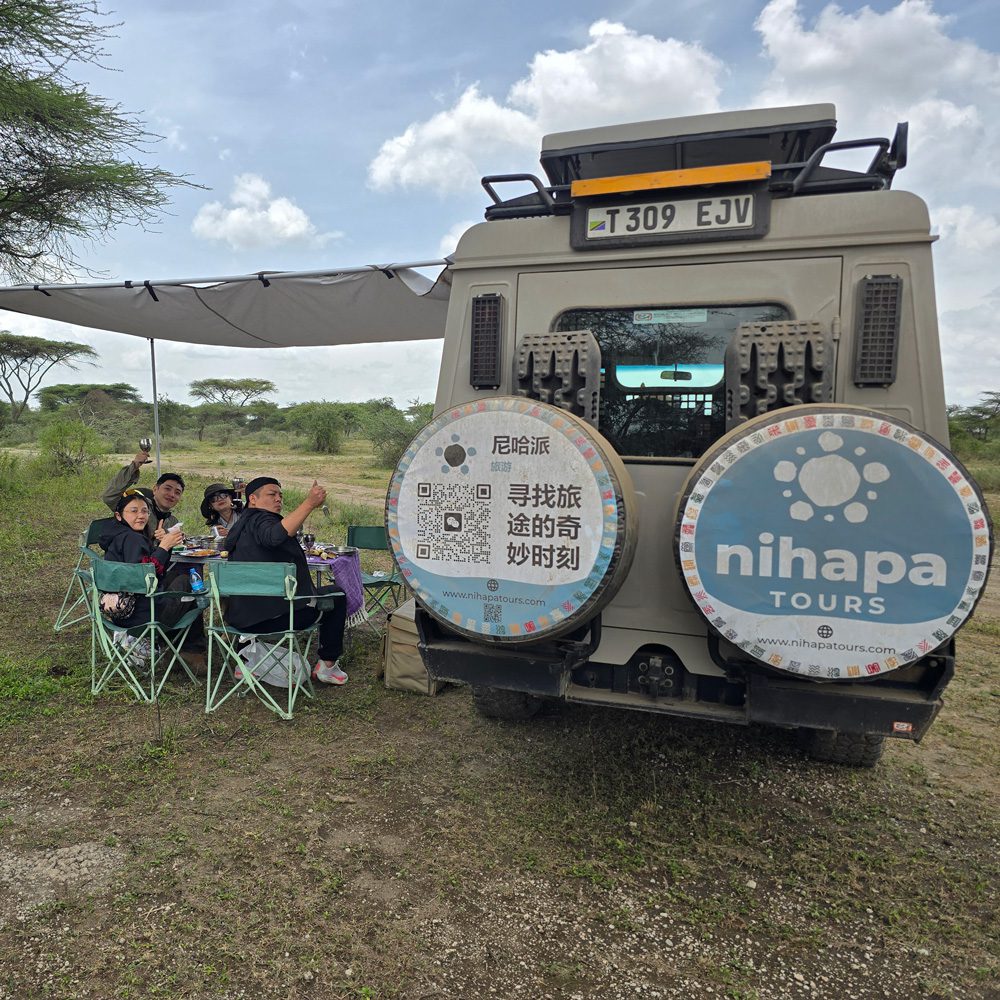
Health and Safety Tips
Health and safety planning is an essential part of preparing for a safari in Tanzania, ensuring that travelers enjoy their experience with confidence and peace of mind. With proper precautions, safaris remain a safe and well-managed form of travel across all major national parks.
Vaccinations are an important first step before travel. Commonly recommended immunizations include yellow fever (especially if arriving from a risk country), hepatitis A and B, typhoid, and routine vaccines such as tetanus and measles. It is advisable to consult a travel clinic well in advance to confirm the latest health requirements based on individual travel history and itinerary.
Malaria prevention is particularly important, as many safari regions lie in malaria-risk zones. Preventive medication is often recommended, along with practical measures such as wearing long sleeves in the evening, using insect repellent, and sleeping under mosquito nets provided by lodges and camps. While malaria risk varies by season and altitude, precautions should always be taken seriously.
Drinking water safety is another key consideration. Travelers should avoid untreated tap water and instead rely on bottled or filtered water provided by lodges and safari operators. Staying hydrated is essential, especially during game drives, where temperatures can be high and conditions dry.
Travel insurance is strongly recommended for all safari travelers. Comprehensive coverage should include medical emergencies, evacuation services, trip cancellations, and luggage protection. Due to the remote nature of many parks, access to medical facilities may require air evacuation, making insurance an important safety net.
Safari safety rules are simple but must be followed at all times. Guests should always listen to their guide’s instructions, remain inside vehicles during game drives unless told otherwise, and maintain a safe distance from wildlife. Animals in their natural habitat can be unpredictable, and respecting their space ensures both visitor safety and animal welfare. Walking safaris and night activities are always conducted under strict supervision by trained professionals.
By following these basic health and safety guidelines, travelers can focus fully on the experience of exploring Tanzania’s national parks. Proper preparation not only reduces risks but also enhances comfort and confidence throughout the journey, allowing for a smoother and more enjoyable safari adventure.
Transportation and Logistics
Transport and logistics play a central role in shaping the overall safari experience in Tanzania, influencing travel time, comfort, and access to remote wilderness areas. Choosing the right combination of flights and road transfers helps create a smooth and efficient itinerary across the country’s diverse national parks.
Domestic flights are widely used to connect major safari regions, especially when covering long distances between northern, southern, and western circuits. Small aircraft operate scheduled routes between key airstrips, making it possible to reach destinations like Serengeti National Park or Nyerere National Park in a matter of hours instead of long road journeys. These flights are efficient and also offer scenic aerial views of Tanzania’s landscapes.
Road safaris remain the traditional and most immersive way to travel between parks, particularly in the northern circuit. Traveling by 4×4 vehicle allows for flexible game viewing along the way, with opportunities to stop for wildlife sightings, photography, and cultural encounters. While road journeys can be long due to distances and terrain, they provide a deeper sense of the landscape and a gradual transition between ecosystems.
Fly-in safaris combine air and ground travel, offering the most time-efficient and comfortable way to reach remote parks. Guests fly into bush airstrips and are transferred directly to lodges or camps. This option is especially popular for luxury itineraries, honeymoon trips, and visits to distant regions like the Serengeti, Ruaha, or Katavi. It reduces travel fatigue and maximizes time spent on actual game drives.
Airport connections typically begin at Kilimanjaro International Airport for northern circuit safaris or Julius Nyerere International Airport for southern and coastal routes. Efficient transfers between airports, hotels, and domestic flight terminals are essential for maintaining a smooth itinerary. Most safari operators coordinate all logistics to ensure seamless transitions between locations.
Packing advice is also important due to varying transport methods. Soft-sided luggage is strongly recommended for domestic flights, as small aircraft have strict weight and space limitations. Neutral-colored clothing, layered outfits for changing temperatures, binoculars, sunscreen, insect repellent, and a good camera are essential. Light packing improves mobility and simplifies transfers between vehicles, flights, and lodges.
Overall, Tanzania’s safari logistics are well-developed but require thoughtful planning. Combining domestic flights with strategic road transfers ensures both efficiency and immersion, allowing travelers to experience the country’s vast wilderness without unnecessary delays or complications.
FAQs About Tanzania National Parks
Most travelers need 7–10 days to experience Tanzania properly. This allows time to visit key parks like Serengeti National Park and Ngorongoro without rushing. Shorter trips of 3–5 days are possible but usually limited to one region, such as the northern circuit.
There is no single “best” park, as each offers something different. The Serengeti is best for the Great Migration, Ngorongoro for dense wildlife viewing, Tarangire for elephants, and Nyerere National Park for boat safaris and wilderness experiences.
The best overall period is June to October, when dry conditions make wildlife easier to spot. However, January to March is excellent for calving season in the Serengeti, while November to May offers green landscapes and fewer crowds.
Yes, Tanzania is considered safe for tourism, especially within national parks and with licensed operators. Following the guide instructions, staying in designated areas, and using reputable safari companies ensures a safe and well-managed experience.
Family-friendly parks include Tarangire, Lake Manyara, and Arusha National Park due to shorter driving distances and easier wildlife viewing. Many lodges also offer family rooms, child-friendly activities, and flexible itineraries.
Safari costs vary widely depending on comfort level. Budget safaris may start around $150–$250 per person per day, mid-range safaris around $300–$600, and luxury safaris can exceed $700–$1,500 per day, depending on lodges and season.
Yes, combining Zanzibar with a safari is very popular. Many itineraries include northern circuit parks followed by beach relaxation in Zanzibar. Flights connect major safari hubs to the island, making it a seamless bush-and-beach experience.
The migration is year-round, but key highlights vary by season. Calving occurs January–March in the southern Serengeti, Grumeti crossings May–June, and Mara River crossings July–October in the north.
The best place to see all the Big Five animals is the Ngorongoro Crater due to its compact ecosystem. The Serengeti also offers strong Big Five sightings, especially lions, leopards, elephants, and buffalo.
Most travelers require a visa, which can be obtained online as an e-visa or on arrival, depending on nationality. A valid passport with at least six months’ validity is required.
Light, neutral-colored clothing, comfortable walking shoes, a hat, sunscreen, insect repellent, binoculars, and a good camera are essential. Layered clothing is important due to the changing temperatures between morning and afternoon game drives.
Private safaris offer flexibility, personalized pacing, and custom itineraries, while group safaris are more budget-friendly. Families, photographers, and honeymooners usually prefer private safaris for greater comfort and control.
The northern circuit is ideal for first-time travelers, especially Serengeti and Ngorongoro, because of reliable wildlife viewing, good infrastructure, and a wide range of accommodation options.
Yes, Tanzania offers year-round wildlife viewing. Dry seasons provide easier sightings, while green seasons offer dramatic scenery, birdlife, and fewer tourists
Look for experienced guides, strong reviews, transparent pricing, and customization options. A trusted operator such as Nihapa Tours can design tailored itineraries based on interests, budget, and travel style.
Conclusion
Tanzania offers unmatched safari diversity, from Serengeti’s vast plains to Ngorongoro’s wildlife-rich crater and Nyerere’s river ecosystems. Each park delivers unique experiences, shaped by seasons, landscapes, and animal movement.
Visitors can witness the Great Migration, predator encounters, river safaris, and cultural traditions all within one country. Every journey brings moments that feel raw, authentic, and deeply connected to nature.
Responsible travel is essential to protect these ecosystems for the future. Choosing ethical operators and respecting wildlife ensures long-term conservation.
With proper planning, travelers can enjoy a seamless safari tailored to their interests. Nihapa Tours helps design customized itineraries that combine comfort, timing, and expert guiding for a truly memorable Tanzania experience.