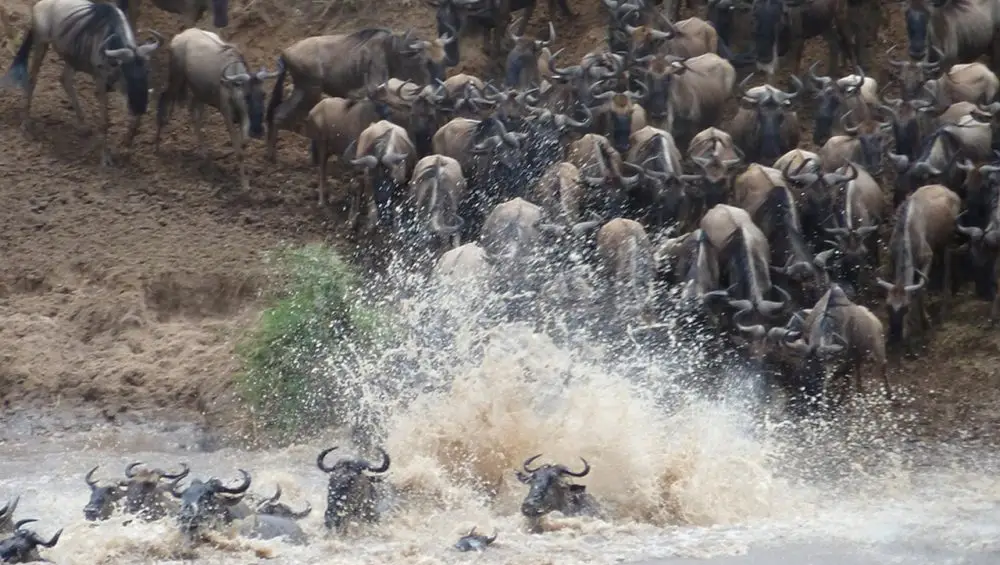
The Mara River crossings in Northern Serengeti usually occur between July and October, when wildebeest move north during the Great Migration. August and September are often strong months to plan a safari around this event, although crossings can begin earlier or continue later depending on rainfall, grazing conditions, and herd movements. There is no fixed crossing date, and seeing the herds reach the river does not guarantee that they will cross during your visit.
Which Month Is Best for the Mara River Crossing?
August and September are popular months for witnessing the Mara River crossings in Tanzania. July can also offer opportunities as migrating herds reach Northern Serengeti, while crossings may continue into October if conditions remain favorable.
The timing varies each year because the Great Migration follows seasonal rainfall and the availability of fresh grass. Some herds may gather along the riverbanks for hours or days before crossing, while others move to different sections of the river.
For travelers planning a safari specifically around the crossings, August and September are useful starting points. However, check recent migration updates before departure because the herds do not follow a predictable calendar.
Where Can You See the Mara River Crossing in Northern Serengeti?
Kogatende and the Lamai Wedge are two important areas to consider when planning a Mara River crossing safari in Northern Serengeti.
Kogatende provides access to the northern migration area and has an airstrip serving safari camps and lodges. The Lamai Wedge, located between the Mara River and the international border, offers access to another part of the northern Serengeti ecosystem.
Wildebeest do not use the same crossing point every time. They may gather at one section of the river, retreat, and eventually cross elsewhere. Choosing accommodation with convenient access to the wider migration area can therefore be more useful than relying on a single crossing location.
Your safari guide can monitor herd movements and adjust game drives according to local conditions, although the location and timing of a crossing cannot be guaranteed.
How Many Days Should You Spend in Northern Serengeti?
Plan to spend at least three nights in Northern Serengeti if witnessing a Mara River crossing is one of your main safari goals. Four nights or more can provide additional opportunities to follow the herds and explore different areas.
A crossing might happen shortly after you arrive, but wildebeest can also remain near the river without entering the water. Some groups approach the bank repeatedly before crossing, while others change direction or move away.
Spending several nights in the area gives your guide more opportunities to locate the herds and respond to changing conditions. It also allows time to enjoy other wildlife sightings, including elephants, giraffes, lions, and other Serengeti species.
Even with a longer stay, a river crossing is never guaranteed. The extra time improves your chances, but it doesn’t guarantee a particular wildlife encounter.
Why Are the Mara River Crossings Unpredictable?
Rainfall, fresh grazing, and water availability drive the Great Migration. Wildebeest move through the Serengeti ecosystem in response to these conditions rather than fixed dates.
When herds reach the Mara River, they may gather along the banks before deciding to cross. The animals can hesitate, retreat, or move to another location. Sometimes a large group crosses suddenly; at other times, no crossing occurs during several hours of observation.
River conditions, herd position, and behavior all influence the timing. This uncertainty is part of the natural migration and explains why no safari operator can honestly guarantee a Mara River crossing on a specific day.
The best approach combines appropriate seasonal timing with a flexible itinerary, experienced local guiding, and enough time in the Northern Serengeti.
How Do You Plan a Safari Around the Mara River Crossing?
Start by choosing travel dates between July and October, with August and September often being suitable options. Next, choose accommodation in Northern Serengeti with easy access to the migration area, and plan to stay several nights there.
If you have seven to ten days for your Tanzania safari, consider combining Northern Serengeti with Central Serengeti and Ngorongoro Crater. This itinerary lets you experience different landscapes and wildlife habitats without making the entire holiday depend on one unpredictable event.
Before booking, ask your safari operator about recent herd movements, accommodation locations, transfer times, and how many game-drive days are available in the north.
At Nihapa Tours, we help travelers plan Tanzania safaris around seasonal wildlife movements, accommodation preferences, and individual travel priorities. Our local team can advise on suitable travel dates and design an itinerary that allows time to explore Northern Serengeti while keeping the wider safari experience in mind.
Is August or September Better for the Mara River Crossing?
Both August and September can be excellent months for a Northern Serengeti migration safari. August may offer opportunities to see herds gathering along the river, while September can bring further crossings as wildebeest move between Tanzania and Kenya.
The best month depends on rainfall patterns and where the herds are during your trip. If your dates are flexible, discuss current migration conditions with your safari operator before deciding.
Ultimately, the best strategy is to choose a suitable season, stay in the Northern Serengeti for several nights, and stay flexible about where and when a crossing may occur.
How Do You Book a Mara River Crossing Safari with Nihapa Tours?
To book a Mara River crossing safari with Nihapa Tours, start by sharing your preferred travel dates, the number of travelers, and how many days you want to spend in Tanzania. Tell us whether witnessing the Great Migration is your main priority and whether you prefer a private safari or a small-group experience.
Our team can help you choose a suitable itinerary, recommend accommodation in the Northern Serengeti, and combine the migration experience with other destinations such as the Central Serengeti and Ngorongoro Crater. We can also discuss accommodation standards, domestic flights where appropriate, transfer arrangements, and the overall safari budget.
Because migration movements change throughout the season, we recommend planning ahead, particularly if you want to travel in August or September when demand for well-located camps can be high.
Ready to plan your Great Migration safari? Visit Nihapa Tours to explore our Tanzania safari experiences or contact our team at [email protected] or via WhatsApp at +255 786 261 927. Share your travel dates and preferences, and we will help you plan a Northern Serengeti safari around the seasonal migration, with realistic expectations and time to enjoy Tanzania’s wildlife.