How Much Does a 7-Day Tanzania Safari Cost for Two People? 2026–2027 Guide
A seven-day private safari in Tanzania for two people can cost approximately US$5,000–US$8,000 in the mid-range category, US$7,000–US$10,000 for upper mid-range comfort, and US$10,000–US$18,000 or more for a luxury experience. Ultra-luxury itineraries can exceed US$18,000. These are broad planning estimates for two adults sharing accommodation, not fixed package prices. The final cost depends on travel dates, camp location, number of Serengeti nights, park charges, vehicle arrangements and whether you travel by road or domestic flight.
At Nihapa Tours, we design private safaris around the way each couple wants to travel. Some guests prefer comfortable lodges and a private guide. Others want premium tented camps, a fly-in connection or extra nights in a migration area. This guide explains what a seven-day safari for two may cost, what should be included in the price and how to compare proposals. We also show how a route can change the budget without losing the wildlife experience you want.
Planning assumption: the ranges below are for two adults sharing one room or tent on a seven-day safari, usually six nights, with a private vehicle and guide. They normally exclude international flights, visas, personal travel insurance, tips and optional activities unless a quotation states otherwise. Always ask for a dated proposal with named accommodation and a written list of inclusions.
1. Average cost of a seven-day private safari for two
The budget for a seven-day safari is shaped by the level of accommodation and the route you choose. The figures below are useful for early planning, but they should not replace a personalized quotation. A couple travelling in a popular migration period and staying in premium camps may pay more than a couple travelling on flexible dates and choosing comfortable mid-range accommodation. A fly-in itinerary also changes the total because it adds domestic flights and airstrip transfers.
| Safari category | Indicative total for two | Typical experience |
|---|---|---|
| Mid-range | US$5,000–US$8,000 | Comfortable lodges or tented camps, private road safari |
| Upper mid-range | US$7,000–US$10,000 | Higher-standard camps, preferred locations and added comfort |
| Luxury | US$10,000–US$18,000+ | Premium lodges or tented camps, personalized service and selected fly-in options |
| Ultra-luxury | US$18,000–US$30,000+ | Exclusive camps, high-end suites, private flights or bespoke arrangements |
These totals are indicative market-planning estimates. They can change with seasonal accommodation rates, government tariffs, taxes, exchange rates and availability. They also assume two people sharing a room. If you require separate rooms, travel with children or add Zanzibar, the calculation will be different. Our wider Tanzania safari cost guide explains the main price categories and cost components in more detail.
What the mid-range budget can provide
A mid-range private safari can include comfortable lodges or tented camps with private bathrooms, full-board meals, a dedicated 4×4 vehicle and a professional guide. The accommodation may be outside a park or in a practical location within the wider safari region. The route should still provide enough time for game drives and should not rely on long daily transfers simply to keep the room rate low. For many couples, this category offers a good balance of comfort, privacy and wildlife time.
What changes in an upper mid-range safari
Upper mid-range accommodation may offer a stronger location, more spacious rooms or tents, better facilities and a more distinctive setting. The service level and dining experience may also be more refined. A couple might choose to spend more on the Serengeti nights, where camp location has a direct effect on daily game-drive logistics, while keeping the other nights at a comfortable lodge. This approach can create a more memorable experience than upgrading every night without considering the route.
What makes a luxury safari more expensive
Luxury pricing can reflect premium camps, high-demand locations, private decks or suites, attentive service, distinctive dining and personalized arrangements. Some properties include selected drinks, laundry or special experiences, while others charge separately. A fly-in connection can save road time but adds flight and transfer costs. Luxury does not guarantee better wildlife sightings. The additional spend is mainly for comfort, privacy, location and service, so choose upgrades that matter to you as a couple.
2. What is included in a seven-day private safari package?
A good quotation should explain exactly what you receive during the seven days. Many private safari packages include six nights of accommodation, meals specified in the itinerary, a dedicated safari vehicle, a professional driver-guide, fuel, scheduled game drives and applicable park charges. Some include airport transfers and drinking water. Others may include domestic flights if the itinerary is designed as a fly-in safari. Never assume that all operators use the same definition of an all-inclusive safari.
Accommodation and meals
Check the accommodation name for each night, the room category and the meal plan. Full board generally includes breakfast, lunch and dinner, but drinks may be extra. Some camps prepare packed lunches for game drives, while others serve meals at the property. If you have dietary requirements or allergies, tell us before booking so we can confirm what the accommodation can provide. Also check whether the first or last night in Arusha is included, especially if your international flights arrive late or depart early.
Private vehicle and professional guide
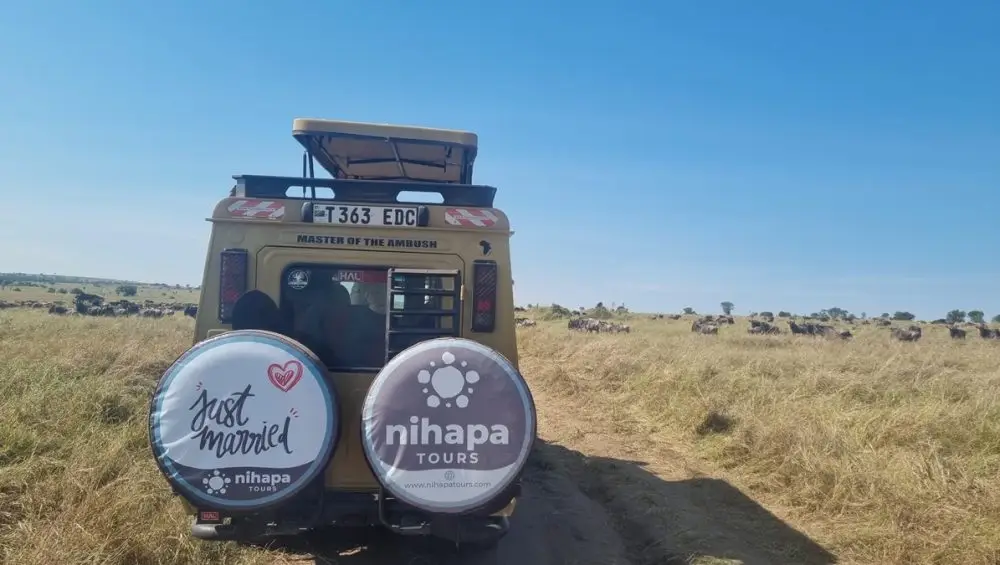
A private safari means your couple has its own vehicle and guide rather than sharing game drives with unrelated guests. Confirm the vehicle type, seating arrangement, pop-up roof, luggage space and facilities such as charging points. Ask whether the same guide and vehicle stay with you throughout the itinerary or whether arrangements change between regions. A knowledgeable guide helps you understand animal behaviour, habitats and local conditions. The vehicle and guide are central parts of the service, so they should be clearly described in the proposal.
Park fees, fuel and transfers
Ask whether the price includes national park entry, Ngorongoro Conservation Area charges, crater-related vehicle fees, concession fees, camping charges and applicable taxes. Confirm the airport transfers and any road transfers between parks. If the itinerary includes domestic flights, check whether the flight, airstrip transfer and baggage allowance are included. Park tariffs are set by the relevant authorities and may change, so the quotation should reflect the dates and destinations in your actual itinerary.
For a practical checklist, read our guide to what is included in a Tanzania safari package. It explains why the details matter when comparing prices.
3. Example seven-day northern Tanzania safari route
A popular seven-day private safari for two combines Tarangire National Park, Serengeti National Park and Ngorongoro Crater. This route offers varied landscapes and a chance to experience several of northern Tanzania’s best-known wildlife areas. The exact order depends on your arrival airport, camp availability and the season. We may adjust the route if your main priority is the Great Migration or if you prefer to reduce driving time with a domestic flight.
Days 1–2: Tarangire and the northern circuit
After arrival and a transfer from the airport, you may spend the first safari day in Tarangire National Park. The park is known for elephants, baobab trees and varied birdlife. Two days in this region can provide time for game drives without immediately undertaking the longest transfer of the trip. The accommodation standard and location will influence the price. Some couples prefer a comfortable lodge near the park, while others choose a more secluded property for a quieter start to the holiday.
Days 3–5: Serengeti National Park
The Serengeti is often the largest part of the budget because accommodation, park charges and logistics vary by region and season. Central Serengeti is a useful year-round base, while Northern Serengeti may be more appropriate for travellers interested in the migration herds during the river-crossing season. Southern Serengeti and Ndutu are especially relevant during the calving season. We recommend choosing the area according to your travel dates rather than selecting a camp only because it has a lower rate.
Days 6–7: Ngorongoro and return to Arusha
Ngorongoro Crater offers a different wildlife setting, with a high concentration of animals within a dramatic volcanic landscape. The crater descent and conservation-area charges should be clearly shown in the quotation. After the game drive, you may stay near Karatu or return towards Arusha, depending on your departure time. If you have an international flight on the final day, allow sufficient time for the road transfer and check-in. A comfortable itinerary should not depend on a tight connection.
4. How season and destination affect the price for two
Travel season has a major effect on accommodation availability and the type of wildlife experience you can plan. The Great Migration moves through the Serengeti ecosystem throughout the year, and different regions become more relevant at different times. A camp in a popular migration area may have a higher seasonal rate and limited room availability. If your dates are flexible, we can compare nearby weeks, but the route should still match your wildlife interests.
January to March: southern Serengeti and Ndutu
Many couples choose this period to experience the calving season in the southern Serengeti and Ndutu area. Wildlife activity can be rewarding, and the open plains provide a distinctive landscape. Seasonal camps may have limited availability, especially during popular weeks. The cost depends on the camp category, exact location and number of nights. If calving season is your priority, plan early and avoid choosing accommodation far from the region simply because it appears cheaper. Read our Ndutu guide for more detail.
June to October: western and northern Serengeti
This period attracts travellers interested in the migration as herds move through the western and northern parts of the ecosystem. Northern Serengeti is particularly popular during the months associated with possible Mara River crossings. Camps in the north can be expensive and book up early. River crossings are unpredictable and cannot be guaranteed on a specific date. If you want to focus on this region, budget for enough nights and choose a camp with practical access to the wider area. Our Mara River crossing guide explains the seasonal considerations.
Green season and flexible travel dates
Travelling outside the busiest periods may offer more accommodation choices and potentially lower rates. The landscape can be lush, birdlife can be excellent and some areas feel quieter. Rain can affect road conditions and some camps operate seasonally, so check the exact property and route. If you are flexible, ask us to compare dates before and after the busiest weeks. A small change can sometimes improve value without changing the overall experience you want.
5. Road safari versus fly-in safari for two people
Transport is an important part of the budget. A road safari uses a private 4×4 and guide for transfers and game drives. A fly-in safari adds domestic flights and airstrip transfers but can save time, particularly when travelling to remote parts of the Serengeti. Neither option is automatically better. The right choice depends on the number of days, your preferred camp and whether you want to experience the landscape between parks.
When a road safari offers better value
A road safari can be cost-effective when you have enough days to travel comfortably between parks. It gives you a private vehicle and guide throughout the route and can include game viewing along suitable transfer roads. However, driving distances can be long. If the itinerary includes Tarangire, Serengeti and Ngorongoro, check how many hours are spent on the road and whether you have enough time for game drives. A low price should not come at the expense of an exhausting schedule.
When flying can be worth the extra expense
Flying may be a good choice if you have limited time or want to reach a remote camp quickly. It can preserve a larger part of the day for wildlife viewing and reduce long road transfers. The cost depends on the route, date, airline, seat availability and baggage allowance. Confirm whether the airstrip transfer and any additional baggage costs are included. For a couple celebrating a special occasion, a fly-in connection can make the trip feel more relaxed, but it should fit the overall budget.
A combination of road and air travel
Some itineraries use road transfers for Tarangire and Ngorongoro, then fly from the Serengeti to Arusha or Zanzibar. This can provide a good balance between cost and time. The proposal should show each flight, transfer, baggage rule and connection. If you are comparing a road itinerary with a fly-in itinerary, compare the full journey from your arrival airport to your final departure point. Our fly-in versus road safari guide for couples explains the main trade-offs.
6. Private vehicle costs and why sharing changes the price
A private safari gives the two of you a dedicated vehicle and guide. The vehicle cost is shared by two guests rather than a larger group, which is one reason the per-person rate is higher than a group-joining safari. In return, you have more control over the pace of the day, the time spent at sightings and the stops that matter to you. The guide still needs to follow park regulations and practical safety requirements, but the itinerary can be designed around your interests.
What a private vehicle should provide
Ask whether the vehicle is a purpose-built 4×4 safari vehicle with a pop-up roof, comfortable seating, seatbelts, charging facilities and enough room for luggage. Confirm that the vehicle is assigned to your couple for the safari and that the guide is included. If you have photography equipment, mobility needs or special seating preferences, mention them before booking. A well-maintained vehicle and a professional guide are more important than a low price that does not explain the operating arrangements.
When a group safari may be a better fit
A group-joining safari can reduce the per-person price by sharing vehicle and guide costs with other travellers. It can suit couples who are comfortable with a fixed departure date and shared schedule. Check the confirmed group size, maximum number of guests, room arrangement and whether the group is guaranteed to operate. A group departure should have a clear operator and itinerary. It should not involve unexpected changes to the accommodation or route after you have paid.
How to decide between private and group travel
Choose a private safari if privacy, flexibility and a schedule designed for the two of you are important. Consider a group safari if your dates are fixed and reducing the per-person price matters more than having full control over the day. Compare the final total and the actual services rather than assuming that a group option is always cheaper. Our guide on whether joining a group safari in Tanzania is worth it explains the advantages and trade-offs.
7. Optional activities and extra expenses for couples
Optional experiences can make a seven-day safari more personal, but they are not essential for every couple. Decide which activities matter to you and ask whether they are available in your chosen region and travel month. Some activities require advance reservations, have age or health restrictions, or depend on weather and operational conditions. The quotation should identify which experiences are included and which are additional.
Hot-air balloon safari
A balloon safari offers a sunrise view of the plains and can be a memorable addition for couples. It is an optional activity and is not available from every camp or on every date. The price varies by location and operator. If you want to include it, ask us to check availability before confirming your itinerary. Confirm the early-morning transfer, flight arrangements, landing location and any restrictions. You can still have an excellent safari without a balloon flight, so include it only if it is important to you.
Special accommodation touches
Some properties can arrange a private dinner, room decoration, a special celebration or other romantic touches. These services may carry an additional charge and should be requested in advance. If you are celebrating an anniversary or honeymoon, tell us the occasion and what kind of experience you prefer. We can ask the accommodation what is available and include the cost in the proposal. A thoughtful location or an extra night in the Serengeti may be more meaningful than adding several paid extras.
Tips, drinks, visas and personal expenses
Keep a separate allowance for tips, premium drinks, laundry, souvenirs and personal purchases. International flights, visa fees, comprehensive travel insurance and personal expenses are usually outside the safari package unless the proposal states otherwise. Eligible foreign visitors must also check Tanzania’s mandatory inbound insurance requirement. Read our mandatory inbound travel insurance guide and remember that this policy does not replace comprehensive travel insurance for medical care, cancellation or evacuation.
8. How couples can manage the budget without sacrificing comfort
There are several ways to manage a seven-day safari budget while keeping the experience comfortable. The best approach is to spend strategically on the parts of the journey that matter most. A couple may prefer to pay more for a camp in the right Serengeti region and choose a simpler lodge for one night elsewhere. Another couple may prefer a private vehicle and mid-range accommodation throughout. There is no single correct combination.
Prioritize the wildlife region before choosing a camp
Start with the experience you want. If you are travelling for the Great Migration, choose the likely wildlife region for your dates before comparing camp rates. If your priority is a classic first safari, Central Serengeti may be a practical base. If you want elephants and baobabs, allow time for Tarangire. Once the route is clear, compare accommodation categories within the right areas. This avoids paying for a low nightly rate that creates extra travel time or weakens the experience.
Mix accommodation categories
You can combine comfortable mid-range accommodation with one or two premium nights. For example, choose a special camp in the Serengeti and a more practical lodge near another park. The key is to keep the route sensible and check the transfer time. A mixed-category itinerary can create a memorable stay without requiring the highest room category every night. Review the room details, meal plan and location before deciding whether an upgrade is worth the additional cost.
Book early for fixed peak-season dates
If you want to travel during July, August, the calving season or a holiday period, plan early. Popular camps and room categories can sell out, leaving fewer options. Early planning gives you a better chance of choosing the location and accommodation you prefer. It does not guarantee a lower rate, but it can prevent you from having to accept a less suitable alternative at short notice. If you have flexibility, ask us to compare nearby dates and camp options.
9. How to compare seven-day safari quotations
When you receive more than one proposal, compare the itinerary line by line. Confirm that both quotes cover the same dates, number of travellers, room configuration, destinations, number of nights and accommodation standard. Then compare the services. One proposal may include park fees, airport transfers and a private vehicle, while another may exclude some of those costs. The headline total alone does not show which offer represents better value.
Check the accommodation names and locations
A good proposal should name the accommodation for each night or clearly identify the proposed category if the property is subject to availability. Check whether the camp is inside or outside the park and whether it is in the region you want to visit. If the operator proposes a substitute, ask whether it will be of a similar standard and location. The room category matters too: a standard tent, suite and family room may have different prices and facilities.
Check park fees, transfers and activities
Ask whether the quote includes all relevant park and conservation charges, crater fees, concession fees, fuel, guide services, vehicle, meals, drinking water and transfers. If flights are included, confirm baggage allowances and airstrip transfers. Check whether optional activities are included or listed separately. A clear quotation should not leave you guessing whether an important charge will be payable later. Keep the inclusions and exclusions with your booking documents so you can refer to them during the trip.
Review payment, cancellation and amendment terms
Before paying a deposit, read the payment schedule, balance due date, cancellation conditions and amendment policy. Ask how the operator handles changes in accommodation availability, park tariffs or domestic flight schedules. Confirm the company details and payment instructions in writing. If you are booking a group departure, understand what happens if the intended group size changes. Clear terms are part of a reliable booking, just as much as the itinerary and accommodation.
10. Frequently asked questions about a seven-day safari for two
Is US$5,000 enough for a seven-day private safari for two?
It may be possible for a carefully planned mid-range itinerary, depending on the season, accommodation, route and included services. A peak-season Serengeti camp, fly-in connection or premium room category can increase the total. Ask for a quote based on your actual dates and confirm whether park fees, transfers, meals and the private vehicle are included.
Does the price include international flights?
Usually not. The estimates in this guide are for the safari portion and normally exclude international flights, visas and personal travel insurance. Domestic flights may also be extra unless the proposal identifies them as included. Always check the written inclusions and exclusions before comparing totals.
Is a seven-day safari enough for Serengeti and Ngorongoro?
Yes. Seven days can provide time for Tarangire, Serengeti and Ngorongoro if the route is planned carefully. The exact number of nights in each area depends on your travel dates and wildlife priorities. If the Great Migration is your main goal, you may want to spend more nights in the relevant Serengeti region rather than adding too many destinations.
Why does the price for two differ from a per-person advertised rate?
Some advertised rates are based on larger groups or shared vehicles. A private safari for two has its own vehicle and guide costs, which are shared by only two guests. Accommodation may also be priced per room or per person sharing. Ask whether the advertised amount is per person, per day, per night or for the whole itinerary.
Can we add Zanzibar after the safari?
Yes. Many couples add a Zanzibar beach stay after their safari. The total budget will include the domestic flight or other transfer, island accommodation, meals, airport transfers and optional excursions. The best sequence depends on flight times and your preferred beach area. Ask us to quote the safari and beach extension together so you can see the full holiday cost.
Is a luxury safari worth the extra cost?
It depends on what you value. Luxury can provide a more distinctive camp, higher service levels, more privacy and a preferred location. It does not guarantee better wildlife sightings. A well-planned mid-range safari can be excellent. We recommend choosing upgrades that improve the parts of the experience that matter most to you rather than assuming the most expensive option is automatically the best.
When should we book a seven-day safari?
Book as early as practical if you have fixed dates during the Great Migration, calving season or popular holiday periods. This gives you more choice of accommodation and room categories. If your dates are flexible or you are travelling in a quieter period, availability may be easier, but the right time to book depends on your preferred route and camp.
11. Plan your seven-day private safari with Nihapa Tours
We are a Tanzania-based safari operator, and we create private journeys around your travel dates, accommodation preferences and wildlife interests. We can help you compare mid-range and luxury options, decide how many nights to spend in the Serengeti and choose between road and fly-in arrangements. Our proposals identify the planned accommodation, route, inclusions and additional costs so you can make an informed decision before booking.
To start, send us your arrival and departure dates, the number of adults travelling, preferred accommodation category and the experiences you want most. Tell us whether you would like to visit Tarangire, Serengeti and Ngorongoro, or whether you want to focus on a particular migration season. If you have a budget range, tell us whether it is the total for two and whether it includes international flights.
Explore our Tanzania safari packages, compare the Tanzania safari cost guide and read our Serengeti safari cost guide. When you are ready, contact Nihapa Tours for a personalized seven-day safari proposal for two.