
Kilimanjaro International Airport (KIA): Your Gateway to Tanzania’s Wonders
Kilimanjaro International Airport (KIA), located between Arusha and Moshi, is the main entry point for travelers heading to Tanzania. The most famous attractions include Mount Kilimanjaro, the Serengeti National Park, and Ngorongoro Crater. With its strategic location and efficient services. KIA makes it easy for tourists to explore the country’s rich wildlife and landscapes.
- IATA Code: JRO
- ICAO Code: HTKJ
- Type: Public international airport
- Elevation: about 2932 ft / 894 m above sea level
- Runway: One asphalt runway (09/27), 3,600 m long, capable of handling large aircraft like Boeing 747s and similar wide-body jets
Identified by the airport code JRO, it is the principal international airport serving northern Tanzania. And the main entry and exit point for travelers heading to Arusha, Moshi, Mount Kilimanjaro, and the northern safari circuit. For the majority of safari itineraries operating in this region, arrivals and departures through Kilimanjaro International Airport are standard practice.
The airport was developed to support international travel from its inception and remains one of Tanzania’s most strategically positioned aviation hubs. Its location allows direct access to the country’s primary safari regions without routing travelers through larger coastal cities. This structure has shaped how northern Tanzania tourism operates and continues to influence itinerary planning today.
Kilimanjaro International Airport handles both international and domestic traffic. Long-haul international flights connect the region to major global hubs, while regional and domestic services provide onward connections to other parts of Tanzania. This combination allows travelers to move efficiently from intercontinental flights into safari vehicles or light aircraft without unnecessary delays.
Because of its role and positioning, Kilimanjaro International Airport functions as more than a transport facility. It acts as the logistical starting point for most northern Tanzania journeys. Its continued use reflects long-established travel patterns that remain effective due to geography, infrastructure, and operational reliability.
Table of contents
- Kilimanjaro International Airport (KIA): Your Gateway to Tanzania’s Wonders
- Location and Strategic Importance
- The History and Development of Kilimanjaro International Airport
- Why Kilimanjaro International Airport Is the Main Gateway to Northern Tanzania
- Airlines and Flight Connections at Kilimanjaro International Airport
- Domestic and Regional Flights from KIA
- Passenger Facilities and Services at Kilimanjaro International Airport
- Immigration, Visas, and Arrival Experience at KIA
- Kilimanjaro International Airport and Tanzania Safari Logistics
- Growth of Kilimanjaro International Airport and Its Role in Tourism
- Why Most Safari Itineraries Still Start at KIA
- Arriving at Kilimanjaro International Airport with Nihapa Tours
- Final Thoughts on Kilimanjaro International Airport
- Read more of our articles
Location and Strategic Importance
Kilimanjaro International Airport is situated in the Hai District of the Kilimanjaro Region, positioned between the towns of Arusha and Moshi. This placement has been central to its role as the gateway to northern Tanzania, allowing efficient access to both the mountain climbing routes of Kilimanjaro and the national parks of the northern safari circuit. Arusha, located approximately forty kilometers from the airport, serves as the operational hub for safaris, while Moshi, about thirty kilometers away, is the base for climbers preparing for the ascent of Mount Kilimanjaro.
The airport’s location is deliberate and has influenced the development of safari logistics for decades. Transfers to major safari destinations such as the Serengeti, Ngorongoro Crater, Tarangire, and Lake Manyara are straightforward and timed to minimize road travel. Domestic flights to remote airstrips serving the parks are easily coordinated from KIA, making it the preferred entry point for both private and group safari itineraries.
Its strategic position also allows travelers arriving from international destinations to reach safari lodges and camps within hours of landing. This efficiency is one reason why Kilimanjaro International Airport continues to be the cornerstone of northern Tanzania travel. The geography of the region, combined with the airport’s infrastructure, ensures that all northern circuit itineraries remain practical, predictable, and fully supported.
The History and Development of Kilimanjaro International Airport
Kilimanjaro International Airport was officially opened in 1971, developed with support from the Italian government to establish a modern aviation facility capable of handling international flights. From the outset, the airport was designed to accommodate long-haul aircraft, ensuring northern Tanzania could be directly connected to Europe, the Middle East, and other key markets. Its creation marked a strategic step in supporting the country’s emerging tourism industry and expanding access to the northern safari circuit.
In 1998, the airport became the first privatized international airport in Africa, a milestone that allowed for modern operational management while maintaining high standards for safety and efficiency. This move reinforced Kilimanjaro International Airport’s position as a critical entry point for travelers visiting northern Tanzania and provided the infrastructure necessary to handle increasing international passenger traffic.
Over the decades, Kilimanjaro International Airport has remained central to the planning and execution of safari itineraries. Its development was always aligned with the practical needs of safari operations: a runway capable of handling wide-body aircraft, straightforward customs and immigration processes, and a location that minimized travel times to Arusha, Moshi, and surrounding parks. The airport’s design and management reflect decades of accumulated operational experience, making it a trusted and reliable gateway for both first-time visitors and returning travelers.
Today, the airport continues to serve as the standard entry and exit point for northern Tanzania. Its history demonstrates a balance of foresight and practicality, ensuring that KIA remains fully capable of meeting the demands of modern tourism while preserving the efficiency and predictability that safari operators depend.

Why Kilimanjaro International Airport Is the Main Gateway to Northern Tanzania
Kilimanjaro International Airport remains the primary entry point for northern Tanzania because of its location, infrastructure, and operational reliability. It is strategically positioned between Arusha and Moshi, allowing travelers to reach safari lodges, national parks, and Kilimanjaro climbing routes with minimal travel time. This efficiency has made it the standard starting point for all northern circuit itineraries.
The airport’s infrastructure supports both international and domestic operations. Its runway, terminal facilities, and customs procedures are designed to accommodate a variety of aircraft, including wide-body jets arriving from Europe, the Middle East, and other regions. At the same time, domestic airlines operate frequent flights from KIA to remote airstrips serving the Serengeti, Ngorongoro, and other northern parks. This dual functionality ensures that travelers can move seamlessly from international arrivals to safari departures.
Operational reliability also reinforces KIA’s role. Transfers to Arusha or Moshi are predictable, with road connections maintained and frequently used by safari operators. Domestic flight schedules to key safari destinations are coordinated to align with international arrivals, minimizing waiting times and simplifying logistics for operators and travelers alike.
For these reasons, Kilimanjaro International Airport is more than just an airport; it is the logistical backbone of northern Tanzania tourism. Its role has been established over decades of consistent use by safari operators, guiding travelers efficiently from the point of arrival to the start of their safari journey. The combination of geography, infrastructure, and operational experience ensures that KIA continues to serve as the most practical and reliable gateway to northern Tanzania.
Airlines and Flight Connections at Kilimanjaro International Airport
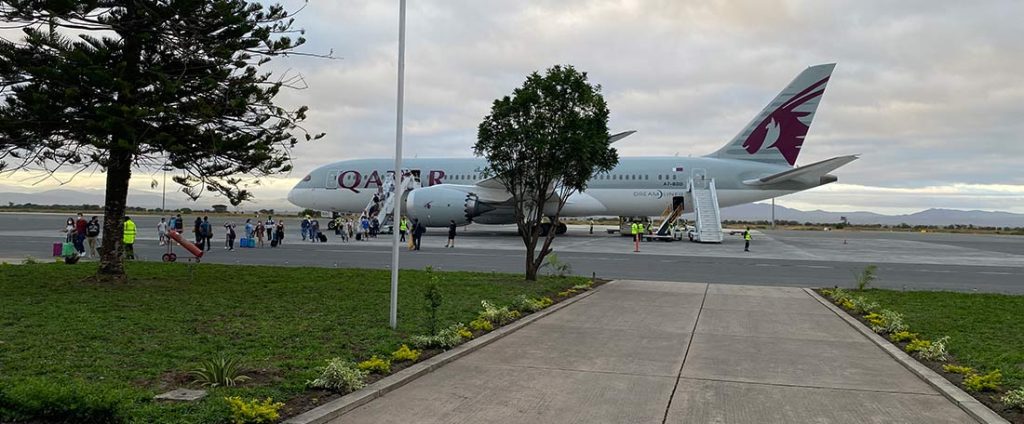
Kilimanjaro International Airport serves both international and domestic airlines, providing connections that make northern Tanzania accessible to travelers from across the globe. International carriers operate scheduled flights from Europe, the Middle East, and other regions, ensuring that visitors can arrive at KIA with minimal layovers and efficient routing. Long-haul airlines regularly connecting to the airport include KLM Royal Dutch Airlines, Qatar Airways, Turkish Airlines, and Ethiopian Airlines. These carriers link northern Tanzania directly with major international hubs, facilitating smooth travel for safari travelers, climbers, and business visitors alike.
Domestic and regional airlines also play a critical role in supporting northern Tanzania tourism. Air Tanzania, Precision Air, Coastal Aviation, and Auric Air operate flights from KIA to destinations such as Zanzibar, Dar es Salaam, and the many airstrips servicing the Serengeti, Ngorongoro, and other national parks. These flights are coordinated with international arrivals to ensure efficient connections, allowing travelers to continue their journey to safari lodges or remote camps with minimal downtime.
The combination of international and domestic connectivity is one of the key reasons Kilimanjaro International Airport functions as the standard gateway to northern Tanzania. Travelers can arrive from overseas and quickly transfer to their safari itinerary, whether by road or domestic flight, without unnecessary delays or logistical complications. For operators like Nihapa Tours, this network of flights allows safari planning to be precise and reliable, providing a seamless start to every journey in northern Tanzania.
Domestic and Regional Flights from KIA
Kilimanjaro International Airport functions as the main hub for domestic and regional flights, providing essential connections to key destinations in northern Tanzania and beyond. From KIA, travelers can access the airstrips of the Serengeti, Ngorongoro Crater, Tarangire, and other northern parks. These flights are particularly important for safari travelers who wish to minimize road travel and maximize time in the wilderness.
Regional connections also include flights to Zanzibar and Dar es Salaam, allowing seamless transitions for travelers combining safari and beach itineraries. Airlines such as Precision Air, Coastal Aviation, Auric Air, and Air Tanzania operate scheduled services between KIA and these destinations, aligning their flights with international arrivals to ensure efficiency.
The availability of domestic and regional flights from Kilimanjaro International Airport has a direct impact on safari planning. By providing reliable air connections to remote airstrips and other cities, KIA enables operators to design itineraries that are time-efficient and logistically straightforward. Travelers can arrive at the airport and proceed to their safari destination or Zanzibar with minimal transfers, ensuring that the journey is smooth and predictable.
This network of domestic and regional flights reinforces KIA’s role as the gateway to northern Tanzania. Its integration with both international arrivals and local air travel creates a seamless travel experience that has become the standard for safari operations and multi-destination itineraries in the region.
Passenger Facilities and Services at Kilimanjaro International Airport
Kilimanjaro International Airport provides essential facilities designed to support international and domestic travelers efficiently. The terminal is functional, focused on meeting practical needs without unnecessary complexity, and structured to handle both large and small passenger volumes.
Travelers arriving at KIA have access to immigration and customs services, which are streamlined to accommodate safari groups, climbers, and regular visitors. Baggage handling is managed efficiently, ensuring that luggage arrives promptly and safely for onward transfers. The airport maintains currency exchange services and ATMs to facilitate immediate financial needs, while dining areas and coffee shops provide a quiet space for travelers between flights.
Duty-free shops offer travelers access to basic goods and souvenirs, though the airport’s primary focus remains on smooth transit rather than retail. VIP and business lounges are available for those seeking additional comfort or a private space while waiting for connecting flights. Parking and car rental services are coordinated with ground operators, supporting both individual travelers and professional safari logistics.
The airport’s facilities are designed to serve the needs of passengers efficiently and predictably. This predictability is a key reason why safari operators rely on KIA as the starting point for northern Tanzania itineraries. From the moment a traveler arrives, the airport’s infrastructure allows a smooth transition from air travel to road or domestic flight transfers, ensuring that safari schedules remain on track.
Immigration, Visas, and Arrival Experience at KIA
Immigration and arrival procedures at Kilimanjaro International Airport are structured to efficiently handle international travelers, including safari visitors, climbers, and business travelers. Most visitors to northern Tanzania are able to obtain a visa on arrival, while travelers with pre-arranged visas move through immigration without delay. The process is standardized, ensuring that even during peak travel periods, arrivals remain predictable and manageable.
Passport control and customs are staffed by personnel experienced in handling tourism traffic, particularly groups arriving for safaris or mountain expeditions. Travelers are required to present their passports, visas, and relevant travel documents. Standard customs checks focus on security and the declaration of goods, with procedures designed to move passengers through efficiently.
For first-time visitors, the airport offers a straightforward arrival experience. Signage is clear, staff are accustomed to international travelers, and the layout of the terminal allows for a smooth transition from the aircraft to ground transport. Luggage is typically delivered promptly, allowing travelers to continue to Arusha, Moshi, or domestic flights to remote safari airstrips without unnecessary waiting.
The combination of efficient immigration, predictable visa procedures, and reliable baggage handling makes KIA a preferred airport for safari operators and independent travelers alike. Its systems have been refined over decades to support the high volume of northern Tanzania arrivals, ensuring that the first step on Tanzanian soil sets the standard for the journey ahead.
Transfers from Kilimanjaro International Airport to Arusha and Safari Destinations
Transfers from Kilimanjaro International Airport to Arusha, Moshi, or northern safari destinations are an essential part of any journey into Tanzania’s safari regions. The airport’s location between Arusha and Moshi allows for efficient road transfers, minimizing travel time and ensuring that itineraries remain on schedule. The drive to Arusha typically takes about one hour, while Moshi is approximately forty-five minutes from the airport.
For travelers continuing to safari destinations, transfers are often coordinated with domestic flights to airstrips serving the Serengeti, Ngorongoro Crater, Tarangire, and Lake Manyara. Road transfers to lodges or camps are planned to align with international arrivals and domestic flight schedules, ensuring smooth and predictable logistics.
Professional safari operators, including Nihapa Tours, structure transfers to provide reliability and efficiency. Vehicles are maintained to safari standards, and drivers are familiar with the routes and timing required for seamless connections. This allows travelers to move directly from the airport to accommodations or safari starting points without unnecessary delays or confusion.
The coordination of transfers from Kilimanjaro International Airport to northern Tanzania destinations is a critical component of safari planning. The airport’s location, combined with established road and domestic flight networks, ensures that all itineraries begin and continue in a controlled, predictable manner. For operators and travelers alike, this reliability is a defining feature of KIA’s role as the gateway to northern Tanzania.
Kilimanjaro International Airport and Tanzania Safari Logistics
Kilimanjaro International Airport plays a central role in the logistics of northern Tanzania safaris. Its strategic location and infrastructure make it the operational hub for planning transfers, domestic flights, and road connections to national parks and climbing routes. For safari operators, the airport is not just a point of arrival but the anchor around which itineraries are structured.
From KIA, travelers can reach Arusha, the operational center for northern circuit safaris, in approximately one hour. Arusha serves as the staging point for vehicle departures, guide briefings, and equipment preparation. For those continuing directly to safari airstrips, KIA coordinates with domestic carriers to minimize ground travel, allowing for efficient access to Serengeti, Ngorongoro, Tarangire, and other destinations. This network of flights and transfers is essential for maintaining tightly scheduled safari itineraries.
The airport also supports logistics for larger safari operations and group travel. Vehicles and equipment can be staged in coordination with flight arrivals, while communication between operators ensures timely transfers. Baggage handling, customs clearance, and immigration are all streamlined to support safari departures, allowing travelers to begin their journey without delay.
KIA’s role in safari logistics extends beyond efficiency. Its predictable infrastructure enables operators to plan contingencies for delays, weather, and seasonal fluctuations. By integrating air and ground transportation from the airport, safaris can maximize time in the field rather than in transit. This operational consistency differentiates professional operators from generic travel services and reinforces KIA’s importance as the gateway to northern Tanzania.
Growth of Kilimanjaro International Airport and Its Role in Tourism
Since its opening in 1971, Kilimanjaro International Airport has grown steadily in response to the demands of northern Tanzania’s tourism industry. Passenger traffic has increased year on year, reflecting both the rising popularity of the safari circuit and the global interest in Mount Kilimanjaro. The airport’s infrastructure has expanded and modernized over time to accommodate larger aircraft, increased flight frequencies, and improved passenger services.
This growth is closely linked to the development of Tanzania’s northern safari region. International airlines have consistently added flights to KIA, recognizing the efficiency of routing travelers directly to Arusha and Moshi. Regional and domestic carriers have likewise increased operations, connecting the airport to the Serengeti, Ngorongoro, Tarangire, and Zanzibar. The result is a network of air transport that supports both tourism growth and operational reliability for safari operators.
KIA’s continued role in tourism is not merely a matter of capacity but of strategic relevance. Its location, connectivity, and operational predictability make it the foundation of the northern safari experience. Tour operators, lodges, and camps rely on the airport to maintain schedules, plan itineraries, and ensure that travelers reach their destinations efficiently. This level of integration between airport operations and tourism logistics reinforces KIA’s position as the central gateway to northern Tanzania.
Looking forward, Kilimanjaro International Airport is expected to remain the main entry point for the northern circuit. As Tanzania continues to attract safari travelers, climbers, and adventure tourists, KIA will serve as both the logistical hub and the operational anchor for this growth. Its consistent performance over decades demonstrates that while tourism evolves, the airport’s central role remains unchanged, combining infrastructure, geography, and operational expertise to support the region’s long-term development.
Why Most Safari Itineraries Still Start at KIA
Most northern Tanzania safari itineraries begin at Kilimanjaro International Airport because it is the most efficient and reliable entry point for both travelers and operators. Its location between Arusha and Moshi allows immediate access to the northern safari circuit and Mount Kilimanjaro, minimizing transit times and maximizing time in the field. This efficiency has been the standard for decades and remains central to itinerary planning.
The airport’s infrastructure supports a variety of aircraft, both international and domestic, ensuring smooth connections to remote airstrips in Serengeti, Ngorongoro, Tarangire, and beyond. Road transfers from KIA to Arusha or safari lodges are predictable, allowing operators to coordinate departures and arrivals precisely. These established patterns of travel make it possible to schedule safaris without unexpected delays or logistical complications.
Professional operators, including Nihapa Tours, rely on KIA as the starting point for planning daily schedules, coordinating vehicles, and managing guides and equipment. Its predictability allows safari logistics to be fully optimized, ensuring travelers spend time in the parks rather than on the road.
Even with improvements to other regional airports and airstrips, Kilimanjaro International Airport remains the central gateway because it combines infrastructure, location, and operational reliability. Its role is not accidental; it reflects decades of consistent use, geography that favors efficient travel, and integration into the northern Tanzania safari system.
Arriving at Kilimanjaro International Airport with Nihapa Tours
For travelers using Nihapa Tours, arrival at Kilimanjaro International Airport is coordinated to ensure a seamless start to the safari experience. Guests are met at the terminal by professional team members who are familiar with both the airport layout and the timing of international flights. Transfers to Arusha, Moshi, or directly to safari airstrips are planned according to arrival schedules, minimizing waiting time and ensuring continuity in the itinerary.
Vehicles used for transfers are maintained to safari standards, equipped for comfort, and driven by experienced drivers who know the routes and the timing required to reach lodges or camps efficiently. For group travelers or private safaris, transfers are organized to maintain schedules for domestic flights and park entries, allowing the safari to begin immediately upon departure from the airport.
Coordination extends beyond transportation. Luggage handling, documentation checks, and any special requests are managed by the Nihapa Tours team to ensure travelers can move from plane to vehicle without interruption. This operational structure reflects years of experience in northern Tanzania, ensuring that all arrivals at KIA are predictable and reliable.
Using Kilimanjaro International Airport as the operational hub allows Nihapa Tours to provide structured and efficient itineraries, whether the safari begins in Arusha, the Serengeti, Ngorongoro, or Tarangire. The airport is not only the entry point but the logistical foundation upon which the entire northern circuit safari is built.
Final Thoughts on Kilimanjaro International Airport
Kilimanjaro International Airport remains the cornerstone of travel to northern Tanzania. Its strategic location, reliable infrastructure, and seamless integration with road and domestic flight networks make it the natural gateway for safari travelers, climbers, and adventure tourists alike. For decades, it has defined the starting point of the northern circuit, providing efficiency, predictability, and operational reliability that safari operators depend on.
The airport’s growth, both in capacity and connectivity, reflects the development of northern Tanzania’s tourism sector. International and regional airlines continue to expand their schedules, while domestic flights link KIA directly to remote airstrips serving national parks and conservation areas. This combination ensures that itineraries remain practical, time-efficient, and fully supported by experienced operators.
For safari planners and travelers, KIA is more than an airport; it is the logistical hub around which the northern Tanzania experience is built. Transfers to Arusha, Moshi, and park airstrips are coordinated precisely, luggage and documentation are handled efficiently, and the operational systems in place allow safaris to begin immediately upon arrival.
Its enduring role as the primary gateway demonstrates a balance of foresight, infrastructure, and operational expertise. While tourism evolves, Kilimanjaro International Airport remains constant, providing a reliable foundation for northern Tanzania journeys. For travelers arriving in Tanzania, KIA is not just the first step on their journey; it is the assurance that their safari, mountain climb, or adventure begins with predictability, efficiency, and professionalism.