Key Takeaways
- For a February luxury safari focused on the wildebeest calving season, prioritize Ndutu, with a short stay in Seronera for big-cat sightings.
- Plan a 7-day itinerary: start with a relaxed evening in Karatu, then spend four nights in Ndutu and one night in Seronera, focusing on wildlife experiences.
- Emphasize private vehicle use and flexible game drives to maximize wildlife viewing and romance during your anniversary safari.
- Ndutu’s short-grass plains are prime for calving, while Seronera offers diverse habitats and a chance for lion and leopard sightings.
- Design your trip around seasonal wildlife, keeping a comfortable pace and focusing on meaningful experiences rather than rushing between parks.
Ndutu or Seronera in February? A 7-Day Luxury Tanzania Safari for Couples
If seeing the wildebeest calving season is your top priority on a February Tanzania safari, spend most of your time in Ndutu. For couples who also want dramatic big-cat encounters and a more varied Serengeti experience, adding a short stay in Seronera can make sense. A 7-day luxury safari can therefore be structured around four nights in Ndutu and one night in Seronera, with a relaxed luxury night in Karatu after arriving from Kilimanjaro International Airport.
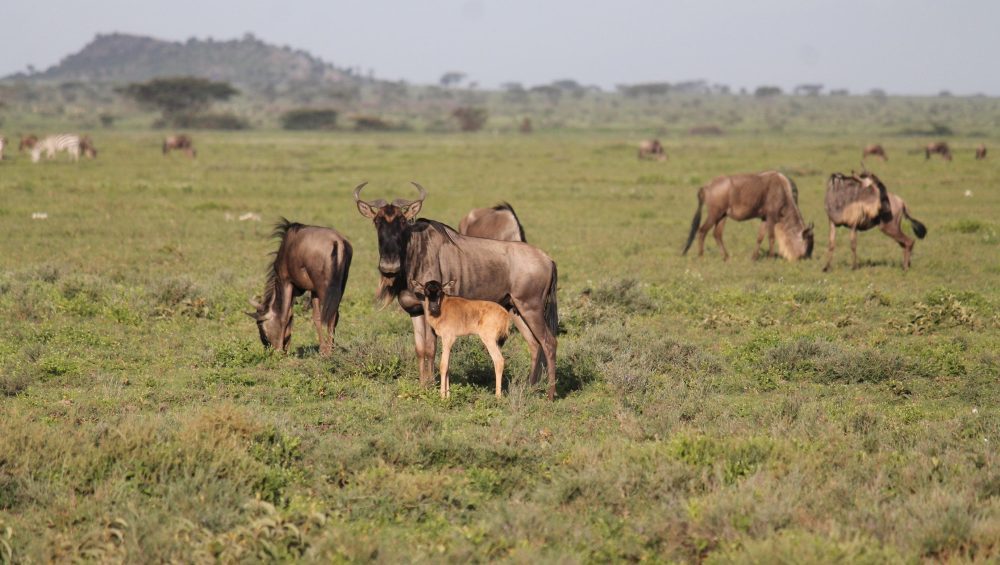
February falls within the main calving period in the southern Serengeti. TANAPA identifies January and February as key calving months, and the short-grass plains around Ndutu are an important area for the wildebeest herds during this period.
For an anniversary trip, the goal isn’t to split the safari equally between destinations. Instead, make Ndutu the main focus and Seronera the complementary experience.
Table of contents
- Ndutu or Seronera in February? A 7-Day Luxury Tanzania Safari for Couples
- Ndutu or Seronera in February?
- Recommended 7-day luxury route
- Why not stay entirely in Ndutu?
- Ndutu vs Seronera in February
- What makes this route suitable for a 10th anniversary?
- What should you look for in a luxury Ndutu tented camp?
- Should you add Ngorongoro or Tarangire?
- The key decision
- Frequently asked questions
- Planning your February anniversary safari
Ndutu or Seronera in February?
For this particular trip, we would choose Ndutu as the primary base.
Ndutu is especially relevant during the calving season because the southern Serengeti’s short-grass plains provide important grazing and calving habitat. February is one of the key months to plan around if seeing newborn wildebeest and the large concentrations of animals associated with the calving season is important to you.
Seronera offers something different. Located in the central Serengeti, the Seronera area includes a mix of grasslands, riverine habitats, and rocky kopjes that support resident wildlife year-round. It is particularly useful for travelers who want to spend time looking for lions, leopards, cheetahs and other predators beyond the seasonal focus of the migration.
The practical answer is therefore:
If calving season is your number-one priority, spend most of the safari in Ndutu and add a shorter Seronera stay if you also want a broader big-cat and Serengeti experience.
Recommended 7-day luxury route
For a 7-day safari, we would plan this as 7 days and 6 nights.
Day 1: Kilimanjaro International Airport to Karatu
Arrive at Kilimanjaro International Airport and meet your private safari team.
Instead of heading straight into the Serengeti, spend the first night near Karatu. This creates a more relaxed beginning to an anniversary safari and avoids making the first day unnecessarily demanding.
Enjoy a private transfer to your luxury accommodation, settle in, and have a relaxed dinner.
If your international arrival time allows, we can adjust the itinerary to travel farther toward Ndutu on the first day.
Day 2: Karatu to Ndutu
After breakfast, travel toward the Ndutu area.
As you approach the southern Serengeti, the landscape changes from the cultivated areas around Karatu to the open plains associated with the migration.
Depending on your arrival time, begin your first game drive in the Ndutu area.
This is where the safari shifts to its main focus: the calving season.
Spend the night at a luxury tented camp in the Ndutu area.
Day 3: Full-day Ndutu safari
Keep this day deliberately flexible.
Rather than following a rigid sightseeing schedule, spend the full day exploring the Ndutu plains and surrounding areas with your private guide.
February is associated with the wildebeest calving season, when large numbers of newborn calves can be present. The concentration of prey also creates opportunities to observe predators such as lions and cheetahs.
For an anniversary safari, a private vehicle is especially valuable because you can spend more time observing interesting behavior instead of following another group’s schedule.
Return to camp for dinner and an evening around the fire.
Day 4: Ndutu, calving and predators
Spend another full day in Ndutu.
Several consecutive nights in the area give your guide the flexibility to respond to where the wildlife is moving, rather than treating the migration as a single fixed location.
The focus can include:
- Wildebeest and newborn calves
- Lions
- Cheetahs
- Hyenas
- Gazelles and other plains wildlife
- Dramatic predator-prey interactions
- The landscapes of the southern Serengeti
No need to rush back to camp in the middle of the day if the wildlife viewing is particularly good. You can also return for a relaxed lunch and enjoy some time at camp before an afternoon drive.
Day 5: Another full day in Ndutu
Keep a third full day for Ndutu if calving season is the main reason for choosing February.
This extra time adds flexibility because wildlife doesn’t follow an itinerary. Herd locations, predator activity, and daily conditions can change.
It also makes the safari feel less like a race between parks.
For a 10th-anniversary trip, this is a good day to add a special experience such as a private bush breakfast, sundowner, or private dinner, depending on the camp and what is available.
Day 6: Ndutu to Seronera
After breakfast, head from Ndutu toward central Serengeti.
Rather than treating the transfer as simple transportation, use it as another game-viewing opportunity when conditions allow.
Arrive in the Seronera area and settle into your luxury tented accommodation.
The change of environment is intentional. Ndutu has been the focus of the calving season; Seronera now gives you another opportunity to explore Serengeti wildlife habitats and concentrate on resident predators. TANAPA describes the central Serengeti as an important wildlife area with diverse habitats supporting species including lions, leopards, elephants and buffalo.
Day 7: Seronera morning game drive and onward travel
Start the final morning with a game drive around Seronera.
A morning drive gives you another chance to spot predators before returning for breakfast or continuing toward your onward connection.
Depending on your flight schedule, you can then transfer to an airstrip for a flight onward or continue by road, depending on your travel arrangements.
Seronera is one of the main air-access areas within the Serengeti, making a fly-out particularly useful when you want to reduce unnecessary driving on the final day.
Why not stay entirely in Ndutu?
You absolutely can.
If your only objective is seeing the wildebeest calving season, staying entirely in Ndutu can be a sensible strategy.
There is a benefit to spending four or five consecutive nights in one area: your guide can focus on seasonal wildlife activity rather than moving you between regions.
However, your priorities go beyond calving alone.
You also want:
- Dramatic big-cat sightings
- Luxury tented camps
- A romantic anniversary experience
- Different Serengeti landscapes
- A private, unhurried safari
For those priorities, adding Seronera provides a useful change of scenery and wildlife focus.
Ndutu vs Seronera in February
| Priority | Ndutu | Seronera |
|---|---|---|
| Wildebeest calving | Primary focus | Secondary |
| Newborn calves | Strong opportunity | Possible |
| Seasonal migration activity | Very relevant | More variable |
| Lion sightings | Excellent opportunities | Excellent opportunities |
| Cheetahs | Good opportunities | Good opportunities |
| Leopards | Possible | Worth targeting |
| Landscape | Southern short-grass plains | Central Serengeti plains, kopjes and riverine habitats |
| Role on this itinerary | Main destination | Complementary destination |
Neither area guarantees a particular wildlife sighting. The migration is a natural process, and the exact location of herds and predators changes from day to day.
What makes this route suitable for a 10th anniversary?
A luxury anniversary safari should not simply mean choosing the most expensive accommodation.
The itinerary itself should feel comfortable.
That means avoiding unnecessary long transfers, allowing enough nights in each area, using a private vehicle, and leaving room for special moments.
A romantic February safari can include:
- A private bush dinner
- Sundowners overlooking the Serengeti
- A private breakfast in the bush
- A special anniversary dinner
- A beautifully prepared tented suite
- Time around the campfire
- Flexible private game drives
- A slower morning after an intensive wildlife day
The exact experiences depend on the camp you choose, but the principle is simple: don’t fill every hour just because you have paid for a safari vehicle.
What should you look for in a luxury Ndutu tented camp?
For this type of trip, choose accommodation for more than its appearance.
Look for a camp with:
- Spacious private tents
- Private bathrooms
- Comfortable beds
- Good dining
- Reliable service
- A quiet and romantic setting
- Outdoor seating or private space
- Campfire evenings
- Flexible meal arrangements
- Private dining options where available
- Convenient access to the wildlife areas you want to explore
During the migration season, booking accommodation well in advance is also important because demand for quality camps can be high. TANAPA notes that the Serengeti offers a range of accommodation from lodges to permanent and seasonal tented camps.
Should you add Ngorongoro or Tarangire?
For this specific seven-day anniversary itinerary, we would not automatically add either.
That is not because they are unimportant. Both can be excellent additions to a Tanzania safari.
The issue is time.
Your primary objective is Ndutu during calving season, followed by big cats and a romantic luxury experience. Adding Tarangire and Ngorongoro would add transfers and reduce the time you have in the areas you want to experience.
A focused itinerary may be more appropriate than trying to visit as many parks as possible.
The key decision
For a couple traveling to Tanzania in February, with the wildebeest calving season as their highest priority, Ndutu should receive most of the safari nights.
A short Seronera stay makes sense when you also want to broaden the wildlife experience and spend additional time targeting resident big cats.
For a seven-day luxury private safari, the structure can be:
Kilimanjaro Airport → Karatu → Ndutu → Ndutu → Ndutu → Ndutu → Seronera → onward
This keeps the safari centered on why you chose February while still giving you a change of scenery before the journey ends.
The key point is that February is an excellent time to target the calving season, but wildlife is wild, and sightings cannot be guaranteed. The value of a private safari is the flexibility to adapt each day to current wildlife conditions rather than following a fixed schedule.
Frequently asked questions
Is Ndutu or Seronera better in February?
If the main objective is the wildebeest calving season, Ndutu is the more relevant base. Seronera is a useful complementary destination for broader Serengeti wildlife viewing and predator-focused game drives.
How many nights should I spend in Ndutu during calving season?
For a seven-day safari where calving is the top priority, around three to four nights in Ndutu gives you meaningful time to explore the area without making the itinerary entirely one-dimensional.
Can I see big cats in Ndutu?
Yes. Ndutu offers opportunities to see lions, cheetahs, hyenas, and other predators, especially because the concentration of prey during calving season drives strong predator activity. However, sightings are never guaranteed.
Is Seronera worth visiting if I am already staying in Ndutu?
For travelers who want more than the migration, it can be. Seronera offers a different central Serengeti environment and provides additional opportunities to search for resident predators and other wildlife.
Is February a good month for a luxury Tanzania anniversary safari?
February is particularly relevant for couples who want to experience the wildebeest calving season. Design the itinerary around seasonal wildlife rather than trying to include too many destinations.
Can I fly instead of driving?
Yes. The Serengeti has airstrips serving areas including Seronera and Ndutu, and flying can reduce time spent on long road transfers.
Planning your February anniversary safari
A seven-day safari does not need to cover half of northern Tanzania to be memorable.
For this trip, the strongest approach is to make Ndutu the heart of the itinerary, use Seronera as a short complementary stay, and leave enough flexibility for wildlife rather than rushing between parks.
With a private vehicle, a knowledgeable guide, and carefully selected luxury tented camps, the itinerary can be shaped around both the calving season and the slower, more intimate pace expected from a 10th-anniversary journey.