Yes, you can see the Big Five in Ngorongoro Crater on a single morning game drive, but no responsible safari operator should guarantee it.
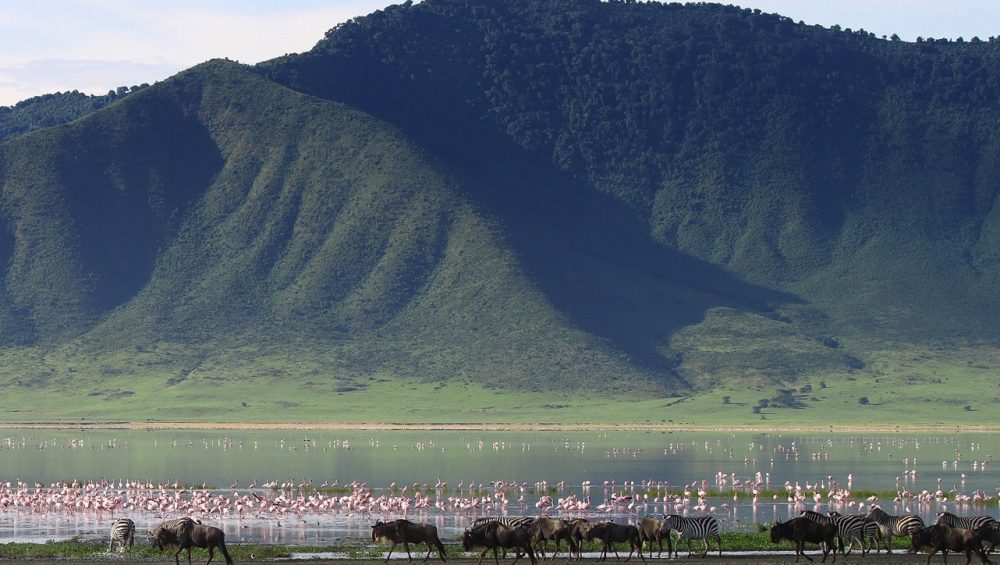
Ngorongoro Crater is one of Tanzania’s best places for concentrated wildlife viewing because its enclosed ecosystem supports a remarkable variety of large mammals within a relatively compact area. Lions, elephants, and buffalo are commonly seen, while black rhinos can also be found on the crater floor. Leopards are present but more elusive, making them the most difficult Big Five member to find during a short visit.
For travelers hoping to complete the Big Five in one morning, start early, use an experienced private safari guide, and let the guide respond to current wildlife sightings rather than following a fixed route.
What are the Big Five?
The term Big Five refers to:
- Lion
- Leopard
- Elephant
- African buffalo
- Black rhinoceros
The name originally referred to some of Africa’s most challenging animals to hunt on foot. Today, the term is primarily used in wildlife tourism and photography.
Tanzania’s national parks are home to all five species, although their distribution and the likelihood of seeing each animal vary between parks. TANAPA identifies the Big Five as lion, leopard, elephant, buffalo and rhino and highlights opportunities to encounter them across Tanzania’s protected areas.
Why is Ngorongoro Crater so good for Big Five viewing?
Ngorongoro Crater is a unique wildlife environment.
The crater floor contains permanent water, grasslands, woodland and other habitats that support large concentrations of wildlife. The crater’s relatively enclosed nature also means game viewing can be very productive compared with searching across a much larger open ecosystem.
For a traveler with limited time, this concentration is a major advantage.
Instead of spending several days moving through different parts of a huge national park, you can spend one focused game drive exploring a relatively compact wildlife area.
That is one reason Ngorongoro often appears on Northern Tanzania itineraries for travelers who want to see a wide range of large mammals.
Can you see lions in one morning?
Very possible.
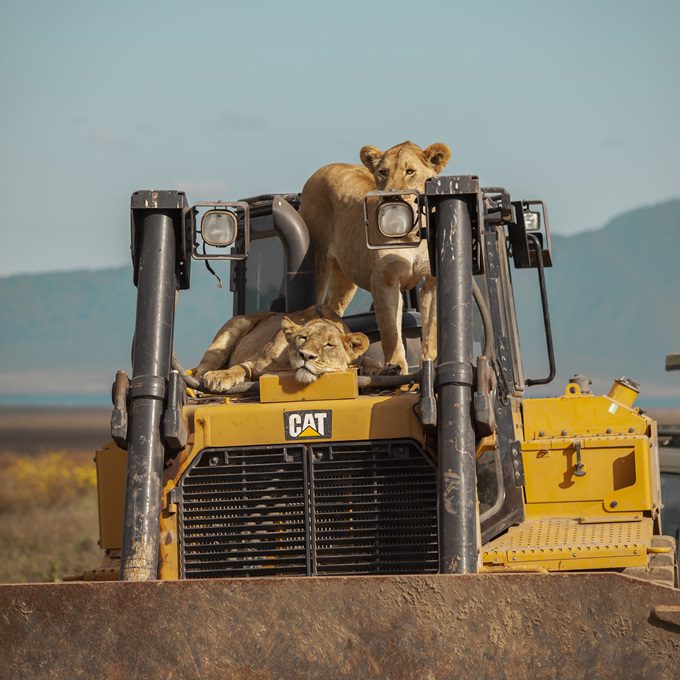
Lions are among the most sought-after animals in Ngorongoro, and the crater provides good opportunities to encounter them.
Your guide will use recent sightings, tracks, animal behavior, and knowledge of the crater to decide where to look.
A lion sighting can sometimes be relatively easy, particularly when a pride is resting in an open area.
But even with lions, there are no guarantees.
Wild animals move freely, and sightings can change from day to day.
Can you see elephants?
Yes, you can see elephants in the Ngorongoro ecosystem.
Elephants are among the large mammals you can encounter during crater game drives.
However, if seeing elephants is your absolute priority, your safari itinerary should not depend entirely on one morning in Ngorongoro. Other northern Tanzania destinations, particularly Tarangire, are also renowned for elephants.
For a traveler interested in the Big Five as a whole, Ngorongoro’s value comes from the combination of species rather than any single animal.
Can you see buffalo?
Buffalo are among the easier Big Five animals to encounter in suitable Ngorongoro habitats.
You can often see large buffalo groups grazing across the crater floor.
This is one reason the crater can be so productive for travelers trying to see several major species during a relatively short game drive.
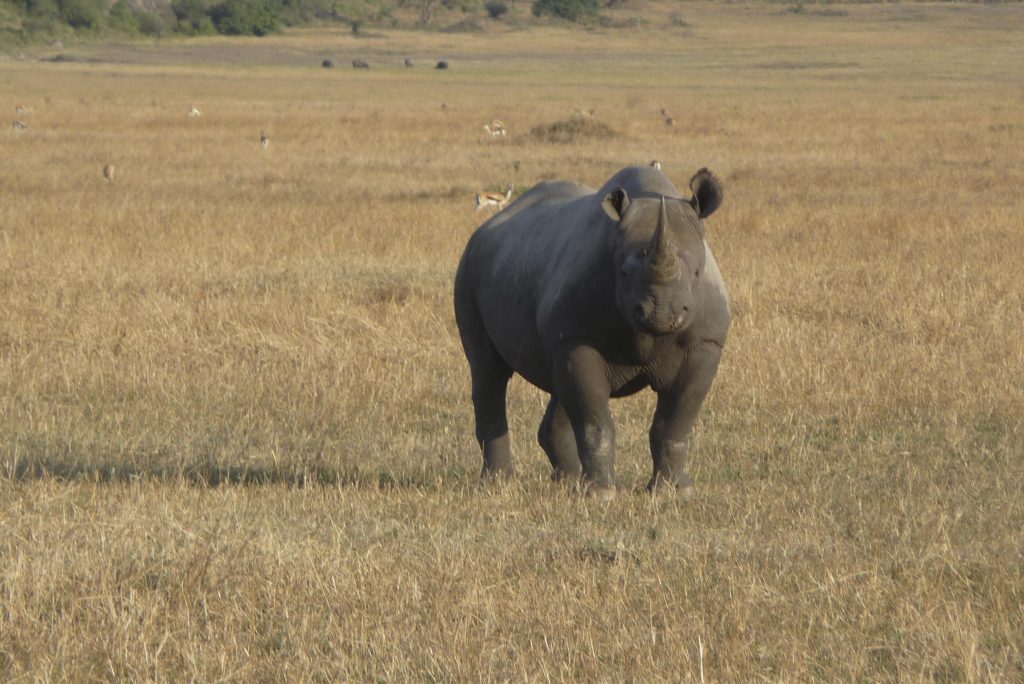
Can you see black rhinos?
Yes, but don’t treat rhino sightings as guaranteed.
The black rhinoceros is one of the most special animals to look for in Ngorongoro.
The crater is one of the places in Tanzania where visitors have a real chance of seeing a black rhino, making it especially valuable for travelers aiming to complete the Big Five.
However, rhinos can be distant and may be difficult to spot without a knowledgeable guide and good binoculars.
If your guide knows of a recent sighting, they can sometimes adjust the morning route to improve your chances.
What about leopards?
Leopards are usually the most difficult Big Five animal to see in a single morning.
They are present in the wider ecosystem but are elusive, solitary, and often difficult to distinguish among vegetation and rocky areas.
A leopard may be resting in a tree, moving through thicker vegetation, or simply out of sight when you pass through an area where you recently saw it.
This is why a safari operator should never promise:
“You will see all five in Ngorongoro.”
A more honest statement is:
“Ngorongoro offers an excellent opportunity to see several of the Big Five in a single game drive, but individual sightings cannot be guaranteed.”
How early should you start the Ngorongoro game drive?
An early start is generally the best strategy if your goal is to maximize wildlife-viewing opportunities.
Morning game drives can offer:
- Cooler temperatures
- Active wildlife
- Better early-morning light
- More time before midday heat
- Opportunities to observe predators before they become less active
Starting early also gives your guide more time to respond to wildlife sightings during the morning.
For travelers trying to complete the Big Five, time matters.
A late start reduces the amount of time available to search for elusive animals such as leopard and rhino.
How long is a Ngorongoro morning game drive?
The exact duration depends on your itinerary, park regulations, entry arrangements, and the plan you agree on with your safari operator.
For a dedicated morning visit, the important thing is not simply the number of hours.
It is how you use those hours.
A private vehicle and experienced guide can make the morning more flexible because the guide can adjust the route based on current wildlife information.
If another guide reports a leopard or rhino sighting, your guide can factor that information into the next part of the drive.
What are the chances of seeing all five?
There is no reliable percentage that applies to every morning.
Your chances depend on:
- Your travel season
- Weather
- Wildlife movements
- Where animals were recently seen
- How long you spend in the crater
- The skill of your guide
- Visibility
- Your luck
This is particularly important with leopard and rhino.
You might see four of the Big Five quickly and spend the rest of the morning searching for the fifth.
Another traveler could have an extraordinary morning and see all five.
That unpredictability is part of what makes a safari different from visiting a zoo.
What is the best strategy for seeing the Big Five in Ngorongoro?
Start early
Give yourself as much productive morning time as possible.
Use a private vehicle
A private safari lets your guide tailor the drive to your interests.
If seeing the Big Five is your priority, say so before the safari begins.
Tell your guide which animals matter most
Don’t simply say:
“We want to see wildlife.”
Tell your guide:
“Our priority is to see the Big Five, especially rhino and leopard.”
That gives the guide a much clearer objective.
Bring binoculars
A distant rhino or leopard may be difficult to identify with the naked eye.
Binoculars can make a major difference.
Be patient
If you have already seen a lion, elephant, buffalo, and rhino, don’t assume the leopard will appear immediately.
Sometimes the final sighting requires patience.
Is Ngorongoro better than Serengeti for seeing the Big Five in one day?
It depends on what you mean by “better.”
If your goal is to see as many major wildlife species as possible during a relatively short visit, Ngorongoro’s concentrated wildlife can make it particularly attractive.
If you want a broader safari experience with more time and different habitats, Serengeti offers a much larger ecosystem and is also home to the Big Five. TANAPA describes Serengeti as home to lions, leopards, elephants, buffaloes and rhinos.
The two destinations therefore work well together.
A classic Northern Circuit safari can use Ngorongoro for concentrated wildlife viewing and Serengeti for a more expansive safari experience.
What if I don’t see all five?
Don’t consider the safari unsuccessful.
Seeing four of the Big Five can still be an exceptional morning.
Even seeing one species behaving naturally can be more memorable than ticking five animals off a list.
For example, watching a lion pride interact, observing elephants with young calves or spending time with a large buffalo herd can become the defining moment of a safari.
Treat the Big Five as a useful wildlife goal, not a guarantee.
Can children do a Big Five morning drive?
Yes.
Ngorongoro can be particularly rewarding for families because the concentration of wildlife can create frequent sightings and help keep children interested.
However, parents should remember that wildlife viewing requires patience.
For younger children, a private vehicle is particularly useful because the family can discuss the timing and pace of the game drive with the guide.
Is one morning enough for Ngorongoro?
One morning can provide an excellent introduction to the crater and can produce exceptional wildlife sightings.
But if seeing the Big Five is extremely important to you, it is better to build the wider safari itinerary around multiple wildlife areas rather than relying on a single morning.
For example:
Tarangire → Serengeti → Ngorongoro
gives you several opportunities to encounter major wildlife species.
If you miss a leopard in Ngorongoro, you still have opportunities elsewhere.
Why your safari guide matters
Wildlife knowledge is one of the most important parts of a successful game drive.
An experienced guide does much more than drive the vehicle.
They can:
- Identify animal tracks
- Recognize alarm calls
- Read animal behavior
- Communicate with other guides
- Know productive areas
- Identify distant wildlife
- Explain animal behavior
- Adjust the route according to current conditions
TANAPA also emphasizes the value of knowledgeable guides in helping visitors spot wildlife and understand Tanzania’s ecosystems.
This is particularly important when looking for elusive animals such as leopards and black rhinos.
Ngorongoro Big Five morning: what should you expect?
A realistic expectation is:
Lions: Strong opportunity
Buffalo: Strong opportunity
Elephants: Good opportunity
Rhino: Possible and highly rewarding
Leopard: Possible but more difficult
All five in one morning: Possible, but not guaranteed
That is the most honest way to approach a Big Five game drive.
Plan Your Ngorongoro Big Five Safari with Nihapa Tours
Want the best possible chance to see the Big Five in Ngorongoro Crater?
Nihapa Tours can design a private Tanzania safari around your wildlife priorities, travel dates, and preferred pace. Our safari planning matches each destination to what you want to experience, whether that means prioritizing the Big Five, adding more time for photography, planning a family-friendly safari, or combining Ngorongoro with Serengeti and Tarangire.
With a private safari, your itinerary can be designed for more flexibility during game drives and more time in the places that matter most to you.
Tell Nihapa Tours what you want to see, when you’re traveling, and how many days you have, and we’ll help you build a Tanzania safari around those priorities.
Final answer
Yes, you can see the Big Five in Ngorongoro Crater during a single morning game drive, but you should not expect or demand that you see all five.
Lions, buffalo, and elephants offer strong opportunities, while black rhino and especially leopard require more luck and patience.
If completing the Big Five is important to you, start early, use a private vehicle, tell your guide before the drive, and allow enough time for wildlife searching.
Most importantly, don’t let the checklist become more important than the experience.
Ngorongoro is valuable not simply because you might see five famous animals in one morning, but because it lets you experience an extraordinary concentration of wildlife within one of Tanzania’s most remarkable landscapes.